










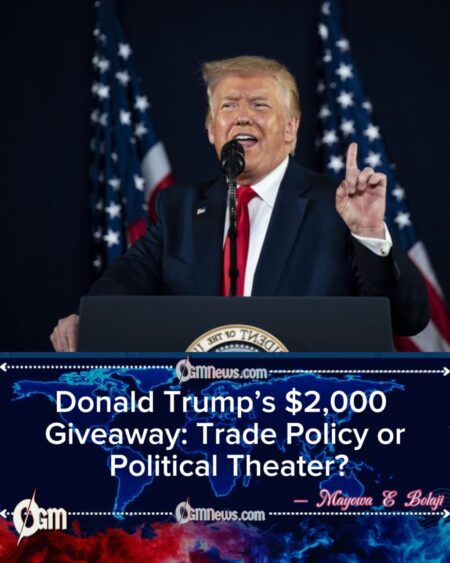
Donald Trump, currently serving a second term as U.S. president, announced that he is considering sending Americans $2,000 rebate checks funded by revenue collected through tariffs. The proposal represents a potential new approach to direct economic relief tied to trade policy, linking domestic consumer benefits to the administration’s broader trade agenda.
Donald Trump emphasized that the plan would demonstrate tangible benefits from his trade policies while providing economic support to households. The administration stressed that details of the program are still under review, reflecting a broader strategy to leverage tariffs as both a revenue source and a tool for domestic economic growth.
Linking Tariff Revenue to Direct Payments
Donald Trump explained that the rebate program would use revenue from tariffs on imported goods to provide one-time $2,000 payments to eligible American citizens. The president framed the initiative as a way to reward consumers while reinforcing policies aimed at protecting U.S. industries and reducing trade deficits.
Donald Trump highlighted that this approach combines fiscal responsibility with direct economic relief, positioning tariff revenue as a means to support citizens rather than solely as a trade instrument. The president argued that this strategy could make his trade agenda more visible and impactful to the public.
Donald Trump acknowledged potential challenges, noting that tariff revenue can fluctuate depending on trade volumes and foreign responses. Nonetheless, the president maintains that careful implementation could provide a short-term boost to household spending while promoting the administration’s economic objectives.
Economic and Household Implications
Donald Trump stated that the rebate checks are intended to support American families, particularly as households face rising costs and inflationary pressures. The initiative could temporarily increase disposable income, potentially driving consumer spending in key sectors.
Donald Trump noted that critics caution the tariffs themselves may raise prices on imported goods, which could offset some of the benefits of the $2,000 payments. Nevertheless, the president emphasized that the checks would provide a tangible financial benefit to Americans while promoting the administration’s trade agenda.
Donald Trump underscored that the announcement also raises broader economic questions about the use of trade policy as a funding mechanism for domestic programs. Analysts are monitoring how this approach could influence household behavior and overall economic growth.
Policy Rationale and Administration Perspective
Donald Trump emphasized that the rebate program reflects a careful balance between fiscal responsibility and targeted economic relief. The administration contends that using tariff revenue in this manner ensures that taxpayer funds are allocated efficiently while delivering benefits directly to citizens.
Donald Trump explained that the plan aligns trade policies with domestic priorities, including strengthening U.S. manufacturing, reducing trade deficits, and supporting American workers. By linking tariffs to household payments, the president aims to showcase a measurable outcome of his trade policies.
Donald Trump’s officials also indicated that the program would be implemented only if sufficient tariff revenue is available, underscoring a cautious approach to fiscal management. The president framed this as a strategic and accountable method for delivering economic support.
Reactions from Lawmakers and Stakeholders
Donald Trump’s proposal has received mixed responses from lawmakers, economists, and industry observers. Supporters highlight the potential for immediate financial relief without expanding the federal deficit, praising the creative use of existing revenue streams.
Donald Trump’s critics, however, warn that relying on tariffs could lead to market distortions, price increases, and potential retaliation from trade partners. Some lawmakers have called for further study to assess the program’s impact on inflation, trade relations, and long-term economic sustainability.
Donald Trump continues to defend the proposal, asserting that it reflects innovative thinking in economic policy. Observers note that if implemented, the rebate program could have significant implications for U.S. households, trade dynamics, and the administration’s broader economic strategy.
Implementation Challenges and Next Steps
Donald Trump indicated that the program is still under consideration, with final details and eligibility criteria yet to be determined. The administration plans to coordinate with the Treasury Department to ensure the feasibility and legality of funding payments through tariff revenue.
Donald Trump’s team recognizes potential challenges, including ensuring adequate collections, addressing international trade implications, and implementing a system to distribute the checks efficiently.
Donald Trump’s advisors suggested that if implemented successfully, the initiative could serve as a model for future programs linking federal revenue to direct economic relief, blending fiscal policy with domestic economic incentives.
Potential Impact on Trade and Consumer Markets
Donald Trump’s rebate proposal could influence both U.S. trade policy and domestic consumer markets. By tying tariffs to direct payments, the president signals a willingness to use trade measures to deliver tangible benefits to American households.
Donald Trump noted that economists and market analysts are closely monitoring potential price fluctuations in imported goods, as well as any retaliatory actions from trading partners. While the rebate checks may provide immediate relief to consumers, long-term impacts will depend on global trade dynamics and domestic market responses.
Donald Trump concluded that the program represents a strategic tool that aligns economic incentives with trade objectives, potentially shaping future policy discussions on how revenue collection can support both domestic priorities and household financial security.


