









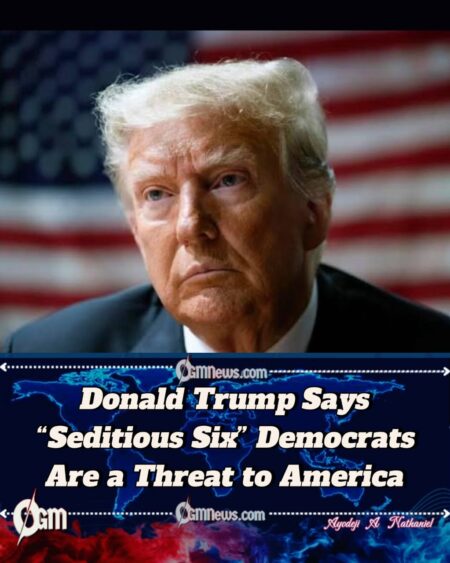
Donald Trump, the current U.S. president serving a second term, has intensified political tensions in Washington after declaring that a group of Democratic lawmakers—referred to as the “Seditious Six”—poses a “threat to America.” Donald Trump made the remarks during a public appearance, prompting immediate reactions from both sides of the political divide.
Donald Trump emphasized that the six Democrats in question have, in his view, consistently obstructed national security, immigration, and intelligence initiatives central to his administration. Trump also questioned whether their actions should be described as “treason” or “sedition,” sparking widespread discussion about the limits of political rhetoric.
Donald Trump Amplifies Concerns Over Congressional Obstruction
Donald Trump continues to argue that the political climate in Washington has become increasingly adversarial, with certain Democratic members actively working against key national objectives. Donald Trump’s remarks reflect a broader frustration within the White House regarding legislative battles tied to border control, surveillance authority, and law enforcement funding.
Trump contends that the actions of the six Democrats extend beyond traditional opposition and venture into deliberate obstruction of national priorities. Trump’s supporters say the president has been patient for months but now feels compelled to confront what he views as dangerous political gamesmanship.
Trump Points to the Enigmatic “Seditious Six”
Trump has not publicly named the lawmakers he has labeled the “Seditious Six,” though senior aides indicate that internal disagreements over security legislation sparked his ire. Trump believes their conduct represents a coordinated effort to weaken or block policies designed to safeguard the country.
Trump’s critics argue that the lack of specific names raises questions about the seriousness of the accusation, suggesting the term may be more rhetorical than literal. Donald Trump, however, maintains that the behavior he has witnessed in private negotiations constitutes a genuine threat to national stability.
Donald Trump Invokes Treason and Sedition in National Debate
Donald Trump’s use of terms such as “treason” and “sedition” has drawn the attention of constitutional scholars who note that the legal threshold for either is exceptionally high. Donald Trump’s phrasing has nevertheless prompted conversations about whether persistent obstruction of national security measures could be interpreted as a breach of congressional duty.
Trump’s allies argue that the president is raising legitimate concerns about actions that may undermine the safety and security of the United States. Trump’s opponents warn that using prosecutorial terms to describe political disagreements risks damaging democratic norms.
Donald Trump Faces Sharp Democratic Pushback
Trump’s remarks triggered quick responses from Democratic leaders who accused him of stoking division and attempting to intimidate political opponents. Trump’s assertions, they argue, mischaracterize legitimate legislative oversight and portray dissent as disloyalty.
Trump was urged by several Democrats to retract or clarify his statements, with some saying such rhetoric could incite hostility toward elected officials. Trump, however, has remained steadfast, insisting that national security cannot be compromised for the sake of political correctness.
Donald Trump Observes Divided Public Reaction
Trump’s comments have polarized public opinion, with supporters celebrating his willingness to confront what they see as harmful congressional behavior. Trump’s base has echoed his claim that the actions of the “Seditious Six” jeopardize national well-being.
Trump, meanwhile, faces criticism from civil rights advocates and political analysts who argue his language could worsen polarization. Trump’s critics believe framing opposition as sedition undermines the democratic process and weakens institutional trust.
Trump Signals a New Phase in Governance
Trump’s latest confrontation reflects deepening divisions between the executive branch and segments of Congress. Trump appears prepared to take a more assertive approach toward lawmakers he believes are obstructing national progress.
Trump’s strategy may influence legislative behavior in the coming months, particularly as the country navigates debates over security funding, immigration reform, and intelligence oversight. Trump’s remarks suggest that clashes over authority, responsibility, and loyalty will continue to define the current political landscape.


