









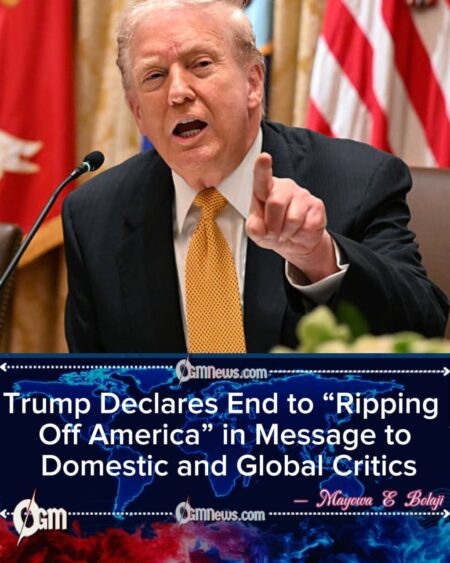
U.S. President Donald Trump, now serving his second term, has issued a sharp warning to individuals and groups he accuses of exploiting the United States, declaring that the nation’s legal institutions will no longer allow what he describes as longstanding abuses. In a forceful statement addressing Leonard Leo, the Koch network, and unnamed foreign actors, Trump insisted that the American judicial system will not permit what he views as coordinated attempts to weaken the country.
Trump’s Message and Its Immediate Context
President Trump’s remarks—delivered in characteristically direct language—reflect a renewed commitment to confronting what he frames as systemic efforts to “rip off the United States.” His statement, aimed at both domestic political figures and foreign governments, underscores the administration’s escalating concerns about external interference and internal political maneuvering.
The president’s comments arrive amid heightened scrutiny of political funding networks, judicial influence debates, and international policy negotiations. While not specifying particular actions, Trump’s vow suggests a forthcoming assertive stance on legal oversight and accountability.
Targeting Political Influence Networks
In mentioning Leonard Leo and the Koch-associated political apparatus, Trump touched on two of the most influential conservative networks in U.S. politics. Both have shaped judicial nominations, policy advocacy, and large-scale election spending for decades.
By directly naming these figures, President Trump signals a shift in his administration’s posture toward power brokers within the conservative establishment. Analysts note that the move may reflect evolving internal dynamics within the Republican Party, particularly as debates continue over ideological direction, funding channels, and judicial influence.
Foreign Governments Accused of Exploitation
President Trump’s reference to “countries” allegedly exploiting the United States adds an international dimension to his remarks. Although he did not specify which nations he was referring to, the administration has frequently criticized certain foreign governments over trade practices, cybersecurity concerns, resource extraction arrangements, and defense commitments.
This latest warning suggests the president intends to intensify efforts to address what he describes as unfair international behavior. U.S. diplomatic observers expect the administration to combine legal, economic, and political strategies to push back against foreign actors deemed detrimental to American interests.
Legal System at the Center of Trump’s Message
Central to the president’s statement is the assertion that the U.S. court system will no longer permit exploitation of the country. This emphasis on legal recourse signals a potential reliance on litigation, regulatory enforcement, and judicial oversight as tools of national policy.
Legal scholars note that the administration has increasingly turned to the courts to challenge what it views as structural inequities—ranging from trade disputes to government contracting issues and political financing mechanisms. Trump’s comments suggest the administration plans to intensify these efforts.
Political Reactions and Broader Implications
Reaction to President Trump’s remarks has been mixed across the political spectrum. Supporters argue that the president is championing accountability and affirming American sovereignty. Critics contend that his language may escalate political tension and undermine cooperation within the conservative coalition.
Regardless of differing views, Trump’s statement reinforces his administration’s broader narrative of combating entrenched interests, foreign interference, and what he characterizes as long-standing systemic vulnerabilities. Observers anticipate that the coming months will reveal concrete steps reflecting this renewed emphasis on legal action and national protection.
President Trump’s message signals a sharpened stance against both domestic and international entities he accuses of weakening the United States. With the court system positioned as a central instrument in this effort, the administration appears poised to pursue an aggressive agenda focused on accountability, legal enforcement, and reclaiming what it views as compromised national interests.


