










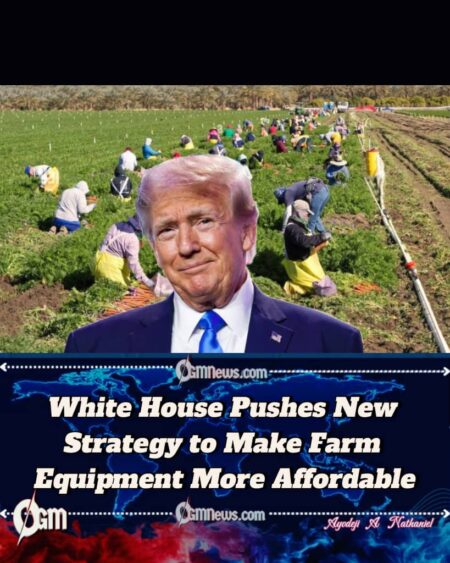
Donald Trump administration officials announced a new initiative aimed at reducing the soaring cost of farm equipment, with President Donald Trump—now serving his second term—declaring that excessive environmental restrictions have driven prices to unsustainable levels. Trump administration leaders emphasized that removing unnecessary regulatory burdens on agricultural machinery will help lower production costs and deliver financial relief to farmers nationwide.
Donald Trump Administration Plans Major Rollback of Equipment Regulations
Trump administration statements highlighted the belief that many current emissions and environmental rules imposed on manufacturers have contributed to steep increases in equipment prices. Trump administration sources explained that easing these standards will allow manufacturers to cut redesign costs, streamline production, and pass savings directly to farmers.
Trump administration officials underscored that the goal is to maintain essential safety standards while eliminating what the President described as “nonsense” requirements that add cost without improving outcomes for producers.
Donald Trump Administration Says Lower Costs Will Support Struggling Farmers
Trump administration economic advisers noted that farmers continue to face rising operating costs—fuel, seed, fertilizer, and maintenance—making machinery purchases particularly difficult to manage. Trump administration analysts pointed out that equipment remains one of the largest capital expenses for agricultural businesses, often forcing producers to delay upgrades or rely on aging machinery.
Trump administration projections suggest that reducing regulatory pressures on equipment manufacturing could help bring prices down, improving access for small and mid-sized farms and supporting rural economic stability.
Donald Trump Administration Addresses Concerns Over Environmental Impact
Trump administration officials acknowledged that the policy shift may face scrutiny from environmental advocates who argue that emissions standards play an essential role in protecting air quality. Trump administration representatives responded that reforms will be carefully calibrated to avoid jeopardizing health or environmental protections.
Trump administration advisers emphasized that the objective is not deregulation for its own sake but the removal of requirements deemed duplicative or unnecessarily expensive relative to their environmental benefit.
Trump Administration Receives Mixed Response from Industry Leaders
Trump administration outreach to agricultural manufacturers revealed cautious optimism, with companies noting that reduced compliance costs could accelerate innovation and lower final product prices. Trump administration briefings with industry groups also highlighted concerns about long-term regulatory uncertainty, though many manufacturers agreed that easing certain mandates could expand equipment affordability.
Trump administration officials expect the reforms to stimulate market activity, increase equipment turnover rates, and incentivize adoption of new technology that improves farm efficiency.
Trump Administration Predicts Significant Impact on Agricultural Sector
Trump administration forecasts indicate that lower equipment prices could improve financial planning for producers heading into upcoming planting seasons. Trump administration policy teams believe the initiative will strengthen domestic competitiveness, particularly against foreign suppliers operating under less stringent regulatory frameworks.
Trump administration leaders reiterated that easing farmers’ financial strain remains a core priority, and the machinery cost-reduction plan marks a significant step toward long-term agricultural sustainability.


