










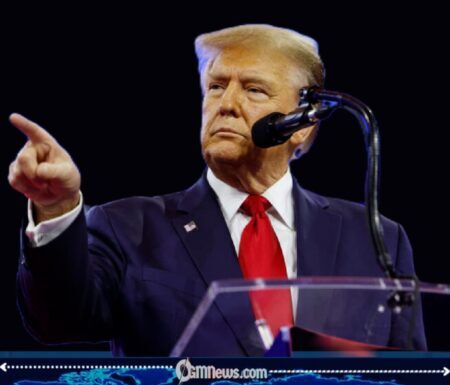
Donald Trump once again dominated international headlines after issuing a stark warning to members of Iran’s security establishment. Trump urged the Iranian Revolutionary Guard and other forces to surrender their arms in exchange for immunity or face severe consequences. The statement, delivered in strong and uncompromising language, has intensified discussions about U.S.-Iran relations and the broader security situation in the Middle East.
Donald Trump’s remarks reflect ongoing tensions between Washington and Tehran, which have fluctuated between confrontation and diplomatic engagement over the years.
Analysts emphasize that while the message appears aimed at discouraging armed resistance, it has also sparked debate about the potential diplomatic and security implications. International observers continue to monitor developments closely.
Donald Trump’s Warning and Its Message
Donald Trump declared in his statement that Iranian forces should “lay down your arms and receive full immunity or face certain death.” He framed the ultimatum as an opportunity for de-escalation through surrender while emphasizing the consequences of continued resistance. The language of the warning has drawn attention from policymakers and analysts worldwide.
Donald Trump’s supporters argue that strong rhetoric can serve as a deterrent against aggression and encourage compliance with international norms. They contend that clear messaging is necessary to reduce the risk of conflict. Critics, however, caution that such ultimatums may complicate diplomatic efforts and harden positions on both sides.
Iranian Reaction to Donald Trump’s Statement
Donald Trump’s warning has not yet elicited an official response from Iranian authorities. Preliminary statements from Tehran suggest that the government views the message as hostile and inconsistent with diplomatic principles. Observers note that Iran has historically rejected external demands perceived as threats to its sovereignty.
Donald Trump’s remarks have nonetheless fueled discussions about the future of U.S.-Iran relations.
Diplomats and analysts stress the importance of communication and de-escalation to prevent misunderstandings. Efforts to address security concerns through diplomatic channels remain a central priority.
International Responses to Donald Trump’s Warning
Donald Trump’s statement has generated mixed reactions from the international community. Some allied nations urge restraint and renewed dialogue, emphasizing the value of diplomacy in resolving conflicts. Others acknowledge the complexity of security challenges while advocating for measured approaches.
Trump’s warning underscores broader debates about the role of rhetoric in international relations. Organizations such as the United Nations continue to emphasize the importance of peaceful solutions and cooperative engagement. Observers highlight the need for strategies that balance security concerns with diplomatic objectives.
Historical Context of U.S.-Iran Relations and Donald Trump’s Role
Trump’s message must be understood within the broader history of U.S.-Iran relations. Over decades, interactions between the two nations have oscillated between periods of negotiation and confrontation. Disputes over nuclear agreements, regional influence, and security issues have shaped the diplomatic landscape.
Trump’s administration previously pursued policies aimed at addressing these challenges, including economic sanctions and efforts to renegotiate agreements. Analysts note that the current statement reflects ongoing complexities in achieving long-term stability and mutual understanding.
Implications of Donald Trump’s Warning for Regional Security
Trump’s ultimatum has raised questions about its potential impact on regional stability. The Middle East remains a sensitive geopolitical environment where political and military developments can have far-reaching consequences. Preventing escalation and fostering dialogue are widely regarded as essential goals.
Trump’s message highlights the delicate balance between deterrence and diplomacy. Regional governments and international stakeholders continue to advocate for measures that reduce tensions and promote cooperation. The situation underscores the importance of nuanced approaches to security challenges.
Trump and the Path Forward
Trump’s warning to Iranian forces has intensified global discussions about security and diplomacy. While the message aims to discourage armed resistance, it has also sparked debate about the role of strong rhetoric in international relations. Observers emphasize the need for measured responses and continued diplomatic engagement.
Trump’s statement serves as a reminder of the complexities of modern geopolitics. As developments unfold, international attention remains focused on efforts to maintain stability and pursue solutions that prioritize peace and cooperation.


