








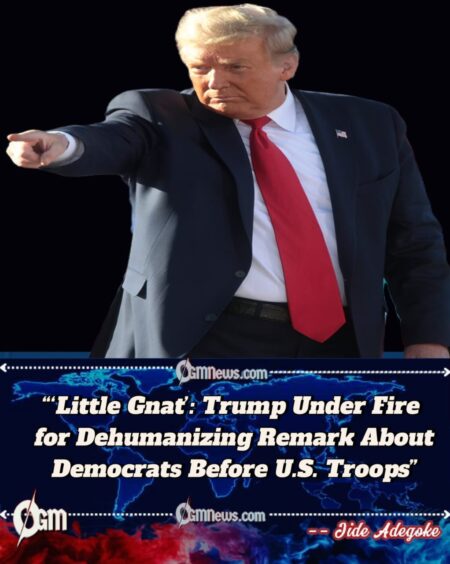
President Donald Trump, currently serving his second term, has triggered widespread criticism after referring to Democrats as a “little gnat on our shoulder” while addressing members of the U.S. military. The remark, made during a speech at a military event over the weekend, is being condemned by political opponents and civil rights groups as dehumanizing and potentially inciting violence.
In his address, the president reportedly said, “We have to take care of this little gnat that’s on our shoulder called the Democrats,” a statement that quickly spread across social media platforms. Critics argue that using such language toward political rivals — particularly before a military audience — undermines democratic norms and encourages hostility within the ranks of national defense.
Several Democratic leaders, including members of Congress, have demanded clarification from the White House, calling the remark “reckless” and “dangerously suggestive.” The administration has not yet issued an official statement addressing the controversy.
Democrats to the Military: ‘We Are Not the Enemy’
Top Democratic lawmakers have urged military officials and service members to remain committed to their oath to the Constitution rather than partisan loyalties. Senate Majority Leader Chuck Schumer described the president’s comments as “unacceptable rhetoric unbecoming of a commander-in-chief,” while House Minority Leader Hakeem Jeffries stated that “the armed forces exist to protect Americans, not to divide them.”
Several veterans’ organizations also voiced discomfort with the president’s language. Retired officers emphasized the importance of maintaining political neutrality within the military, warning that such rhetoric could erode the public’s trust in the institution. “The military must never become a tool for partisan conflict,” said retired General Paul Eaton. “Dehumanizing opponents, even rhetorically, is a dangerous path.”
Political analysts note that Trump’s remark echoes a broader trend in his rhetoric, which often portrays Democrats as obstacles to national progress. While his supporters defend the statement as a metaphor for political opposition, critics insist that his tone crosses a moral and constitutional line.
White House Response and National Impact
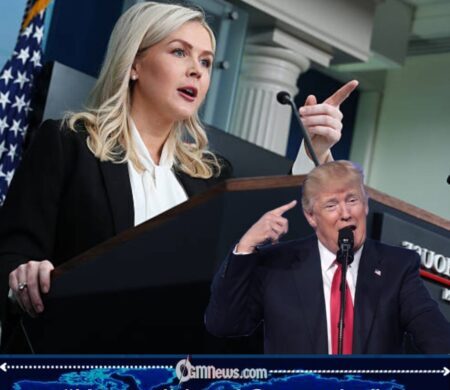
As public reaction intensifies, White House officials have sought to frame the president’s remark as an expression of frustration rather than a call for violence. Press Secretary Sarah Matthews stated that Trump was “speaking metaphorically about political obstruction,” insisting that “the president respects the military’s duty to remain apolitical.”
Despite this clarification, bipartisan concerns persist about the normalization of inflammatory speech at the highest level of government. Advocacy groups, including the Brennan Center for Justice and Human Rights Watch, have warned that dehumanizing language from political leaders can embolden extremism and polarize communities.
With tensions already high amid ongoing partisan disputes in Congress, the fallout from Trump’s remarks may further complicate efforts to foster national unity. Observers suggest that the incident could influence public perception heading into the midterm elections, underscoring the deepening divide in American political discourse.