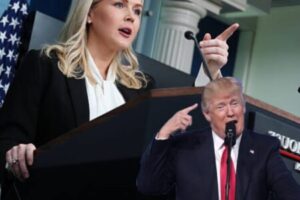


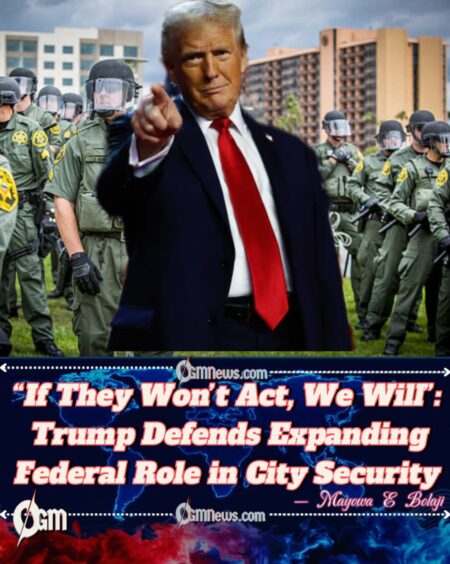
President Donald Trump, currently serving his second term, has announced plans to expand the presence of federal and military personnel in major U.S. cities — including those that have not formally requested such assistance. The president’s declaration, made during a press briefing at the White House, has set off a new wave of political and legal debate over the limits of federal intervention in local governance. “We’re getting ready to go in,” Trump said, his tone resolute. “We’ve watched some of these cities descend into disorder, lawlessness, and fear. It’s our duty as the federal government to protect American citizens when local leaders either can’t or won’t act.”
The announcement represents one of the most assertive domestic security postures of his second administration. According to senior officials, the planned deployments are intended to curb rising violent crime rates, protect federal buildings, and reestablish what the president repeatedly described as “peace through strength.”
WhileDonald Trump’s supporters have praised the move as a bold assertion of executive resolve, critics warn that such an action — particularly without direct requests from affected local governments — risks escalating tensions and undermining federal-state cooperation.
President Donald Trump Defends Federal Authority, Accuses Critics of “Weak Leadership”
Addressing reporters, President Donald Trump defended the legality and necessity of his decision, saying that “inaction in the face of chaos” is not an option. He argued that federal deployment in certain cities has become essential due to “failed local leadership and permissive attitudes toward crime.” “Some politicians want to sit in their offices and talk about process,” Trump said. “I’m focused on results. Americans deserve to walk their streets without fear, and if mayors or governors refuse to do their jobs, the federal government will step in and do it for them.”
The president’s statement drew immediate responses from several Democratic governors and mayors, who accused the administration of federal overreach and politicizing security measures. Among them was Chicago Mayor Danielle Brooks, who warned that any unrequested federal deployment “would be seen as a provocation rather than protection.”
Constitutional experts have also weighed in, pointing to the delicate balance of power between federal and state authorities. Under the Posse Comitatus Act, the use of military forces for domestic law enforcement is heavily restricted unless specifically authorized by Congress or invoked under the Insurrection Act — a rarely used provision that allows the president to deploy troops to quell unrest. Despite these concerns, White House officials insist that the president’s order would primarily involve federal agencies under the Department of Homeland Security and the Department of Justice, rather than active-duty military personnel.
President Donald Trump Reiterates Law-and-Order Vision as Protests Loom Nationwide
President Donald Trump reaffirmed his administration’s commitment to what he called “an uncompromising law-and-order agenda,” insisting that the nation’s stability and unity depend on a “visible show of federal strength.” “America cannot thrive in chaos,” he said. “If we allow lawlessness to spread, we risk losing the very foundation of what makes our country great — security, discipline, and respect for authority.”
As word of the planned deployments spread, civil rights organizations and community leaders voiced concern that an expanded federal presence could lead to unnecessary confrontations. The American Civil Liberties Union (ACLU) issued a statement urging Congress to demand transparency about the scope and duration of any planned operations.
Meanwhile, several Republican lawmakers and governors expressed strong support for the president’s stance. Senator Tom Reynolds (R-Texas) praised the decision, saying, “When cities fail to keep citizens safe, Washington must step in. The president is doing what every responsible leader should — protecting the people first.”
Political analysts say the move underscores Trump’s enduring commitment to his campaign promise of restoring order and strengthening national pride. Yet, the decision could also test the boundaries of executive authority and reignite divisions between state and federal powers — a hallmark issue of his first and second terms.
Broader Implications for Governance and Civil Discourse
Beyond the immediate political implications, Trump’s announcement raises deeper questions about the relationship between government power and civil liberty. Supporters argue that decisive federal action is long overdue, while detractors warn that unchecked authority could set a dangerous precedent for future administrations.
Observers note that the president’s rhetoric — particularly his emphasis on “going in” — is consistent with his broader philosophy of direct, unyielding intervention in matters he perceives as national in consequence. Some analysts see this as part of a deliberate strategy to reaffirm strength on the global stage while consolidating control domestically.
In a polarized political climate, Donald Trump’s declaration is likely to fuel both fervent support and fierce opposition. With state officials bracing for potential deployments and protests expected in several major cities, the coming days may determine how far the administration is willing to extend its federal reach — and how the American public will respond.