










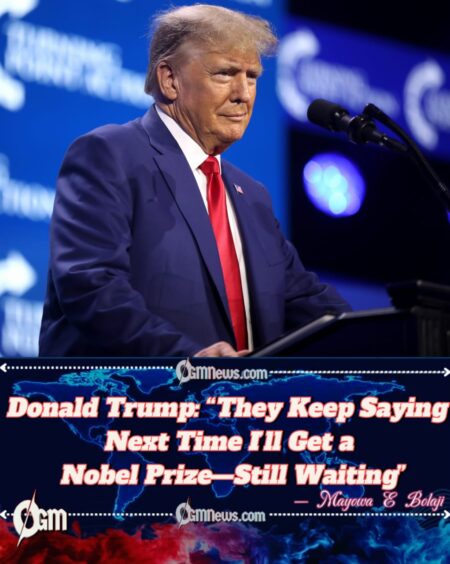
Donald Trump has once again expressed his frustration over not receiving a Nobel Prize, despite what he claims were promises that his accomplishments would earn him one. Speaking at a recent event, Trump remarked: “Every time I do it, they say, ‘If you solve the next one, you will get a Nobel Prize.’ I didn’t get a Nobel Prize.”
Trump’s comments highlighted his ongoing belief that his global efforts, particularly his diplomatic achievements, have not received the recognition they deserve. He has long argued that his administration’s initiatives—especially in the Middle East peace process and international negotiations—were historically significant and deserving of the world’s highest honors.
Many observers see Trump’s renewed statements as part of his broader theme of challenging elite institutions that, in his view, fail to acknowledge his impact. His remarks once again underline the tension between his strong sense of achievement and his perception of bias within the international community.
Donald Trump Jokes About Nobel Winner, Draws Global Reaction
Donald Trump added a characteristic touch of humor to his remarks when he said: “Somebody got it who was a very nice woman. I don’t know who she is, but she is very generous.” The statement drew laughter from some supporters but quickly gained traction online, sparking debate over Trump’s tone and intent.
While his allies insist that Trump was speaking lightheartedly, critics argue that the comment underscores his continued fixation with personal recognition and global prestige. Supporters, however, maintain that his diplomatic achievements—including peace agreements between Israel and several Arab nations—were far more impactful than those of some Nobel laureates.
Social media platforms were abuzz with reactions, with some users echoing Trump’s sentiment that the Nobel Committee often overlooks transformative leaders, while others ridiculed his apparent lack of awareness about the award’s recipient.
Donald Trump’s Pursuit of Recognition Continues
Donald Trump’s reference to the Nobel Prize adds to his long list of public remarks emphasizing his global accomplishments. He has frequently cited his work in diplomacy, peace negotiations, and trade reform as evidence of leadership that deserves international recognition. In his view, his absence from the Nobel winners’ list is not due to lack of merit but political bias.
Political analysts suggest that Trump’s pursuit of acknowledgment reflects his deep desire to be seen as a global statesman whose influence extends beyond American politics. His rhetoric on the matter resonates strongly with his supporters, who believe he is unfairly targeted by media institutions and international bodies.
As Trump continues to shape global political conversations, his comments about the Nobel Prize highlight his enduring narrative of being the overlooked achiever—one who insists that history, eventually, will vindicate him.


