






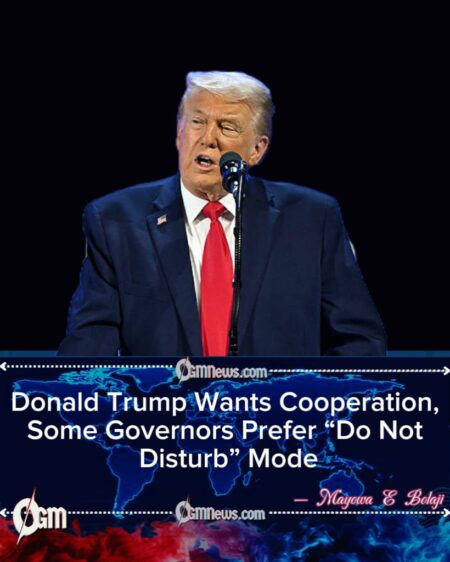
President Donald Trump on Sunday renewed his call for state and local leaders across the United States to work closely with federal immigration authorities, arguing that resistance to cooperation has created what he described as “dangerous circumstances” in several communities. Speaking as the current U.S. president serving a second term, Trump warned that policies limiting collaboration with federal agencies have, in specific cases, been linked to violent crimes and the deaths of two American citizens.
The president’s remarks place immigration enforcement back at the center of national debate, highlighting long-standing tensions between the federal government and jurisdictions that maintain restrictive policies on information-sharing and cooperation. While supporters view the call as a necessary step to enhance public safety, critics argue it risks overreach and could strain trust between local authorities and immigrant communities.
Renewed Call for Federal–Local Cooperation
President Trump’s statement emphasized the importance of unified action among federal, state, and municipal governments in enforcing immigration laws. He argued that effective public safety requires seamless coordination, particularly in cases involving individuals with prior criminal records.
According to President Trump, a lack of cooperation—often attributed to local or state policies limiting engagement with federal immigration agencies—undermines law enforcement efforts. He maintained that when jurisdictions decline to honor federal requests or share relevant information, potentially dangerous individuals may remain in communities longer than necessary.
Public Safety and the President’s Warning
Central to Trump’s message was the assertion that non-cooperation has had tangible consequences. He cited incidents in which crimes committed by undocumented individuals, previously known to authorities, resulted in fatalities. The president described these outcomes as preventable tragedies.
While the White House did not immediately provide detailed case summaries during the remarks, the administration has historically referenced similar incidents to support its position. The president framed the issue as one of responsibility, stating that elected officials must prioritize citizen safety regardless of political affiliation.
The Role of Governors and Mayors
The president directed his appeal specifically to Democrat governors and mayors, many of whom oversee jurisdictions with policies that limit collaboration with federal immigration enforcement. These leaders often argue such policies are designed to foster community trust and encourage crime reporting.
Trump countered that public safety and community trust are not mutually exclusive.
He urged local executives to reconsider policies that restrict cooperation, suggesting that tailored collaboration could protect residents while respecting local governance structures.
Legal and Policy Tensions
The debate over immigration enforcement sits at the intersection of federal authority and states’ rights. Supporters of restrictive local policies argue that the Constitution limits the federal government’s ability to compel state and local participation in immigration enforcement.
The administration, however, maintains that cooperation is both lawful and necessary. Federal officials argue that existing frameworks allow for voluntary collaboration and that refusing to engage creates gaps that can be exploited by individuals who pose security risks.
Responses From State and Local Leaders
Reactions from governors and mayors were mixed following the president’s remarks. Some Republican-led states reiterated their support for closer coordination with federal agencies, citing reductions in crime and clearer enforcement protocols.
Conversely, several Democratic leaders defended their positions, emphasizing the importance of protecting immigrant communities from what they describe as fear-driven enforcement.
They argue that broad cooperation could discourage residents from engaging with local law enforcement, potentially weakening overall public safety.
Broader Implications for National Immigration Policy
President Trump’s comments reflect broader administration efforts to reshape immigration enforcement during his second term. The focus on federal–local cooperation aligns with policies aimed at strengthening border security and interior enforcement simultaneously.
As the debate continues, immigration is likely to remain a defining issue in federal–state relations. The administration’s challenge will be balancing its public safety objectives with constitutional considerations and the diverse approaches adopted by states and municipalities across the country.