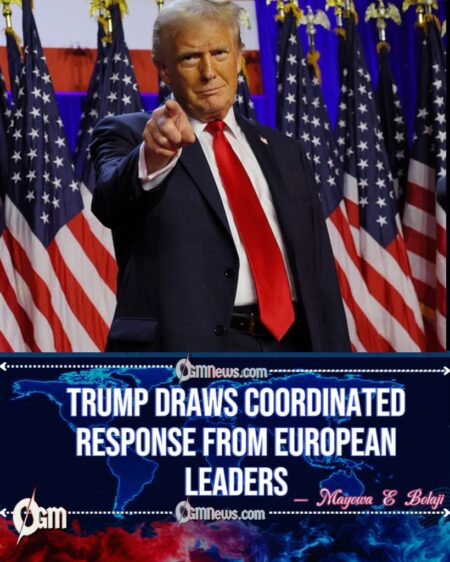
President Trump, currently serving a second term as U.S. president, has reportedly issued statements considered threatening by European leaders, prompting Denmark’s prime minister to issue an urgent warning. The development has spurred coordinated responses from European nations, highlighting growing tensions between Washington and key allies on the continent. European leaders emphasized unity and preparedness in the face of what they described as unpredictable political signals from the United States.
The warning underscores the seriousness with which European governments are treating recent U.S. policy and rhetoric, particularly regarding security, trade, and diplomatic engagement. Analysts suggest that the situation may have broader implications for transatlantic relations in the months ahead.
Denmark’s Prime Minister Issues an Urgent Warning
Denmark’s prime minister addressed the nation and international media, cautioning that President Trump’s statements could have destabilizing effects on Europe’s political and security landscape. The prime minister stressed that Copenhagen would continue to advocate for diplomatic channels but emphasized readiness in response to potential threats.
Officials in Denmark are reportedly reviewing contingency plans, including security protocols and policy measures aimed at mitigating any risks that could arise from heightened tensions. European analysts suggest that this warning may influence other countries to reassess their own positions vis-à-vis Washington’s current approach.
Europe’s Coordinated Response to Trump
Following Denmark’s announcement, several European capitals released statements underscoring solidarity and strategic alignment. Leaders from Germany, France, and the Netherlands convened virtually to discuss joint measures to maintain stability and protect shared interests in light of the perceived threats.
European officials highlighted the importance of a unified stance in ensuring that diplomatic and economic engagement with the United States remains constructive, even amid disagreements.
Analysts note that the cohesion displayed may signal a significant shift in Europe’s approach to U.S. foreign policy under Trump’s current administration.
Implications for Transatlantic Relations
Experts say that Trump’s rhetoric could introduce a level of unpredictability into transatlantic relations not seen in recent years. European nations may now prioritize contingency planning and seek assurances from both U.S. officials and international partners to maintain stability.
While Europe continues to rely on the United States for NATO and security commitments, the current warnings indicate a recalibration of expectations. Some analysts warn that prolonged tensions could affect trade negotiations, defense cooperation, and joint responses to global crises.
Potential Economic and Security Consequences
Financial markets in Europe experienced minor fluctuations following the Danish warning, reflecting investor concerns about political uncertainty. Analysts have noted that even verbal threats or aggressive rhetoric from a major power like the United States can influence European economic confidence and planning.
Security experts emphasize that the warning from Denmark is not a signal of immediate conflict but rather a proactive measure aimed at reducing vulnerability. By highlighting potential risks, European governments hope to reinforce preventive strategies and maintain operational readiness.
Political Reactions Across Europe
Political parties across the continent have reacted to Denmark’s warning in varying ways. Some leaders praised the prime minister for taking a firm stance, while others urged calm and diplomatic dialogue with Washington. The debate has also extended to the European Parliament, where discussions focused on strengthening mechanisms to ensure that Europe can respond cohesively to external pressures.
Observers suggest that these reactions demonstrate both the sensitivity of Europe to U.S. political messaging and the growing emphasis on maintaining regional autonomy and preparedness amid uncertainty.
Europe and the United States
As Europe consolidates its response, the outlook for relations with President Trump’s administration remains complex. Analysts predict that continued vigilance and diplomatic engagement will be necessary to prevent misunderstandings or escalations.
The current situation serves as a reminder of the influence that U.S. policy statements can have on global stability. European nations are likely to maintain close monitoring of Washington while reinforcing internal unity to mitigate any risks posed by unpredictable political developments.