



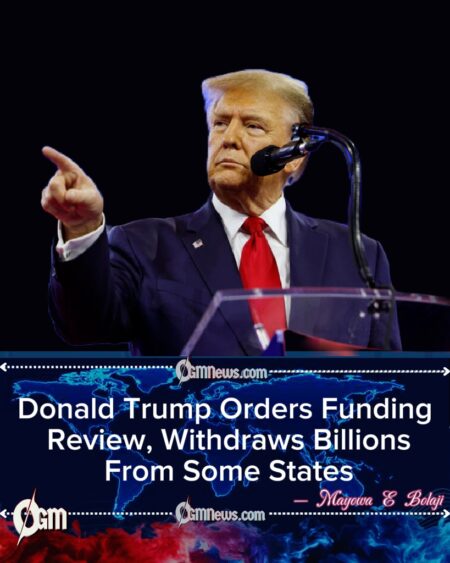
President Donald Trump, the current U.S. president serving a second term, has announced the rescission of more than $1.5 billion in federal funding from several Democrat-run states, citing alleged mismanagement and failure to comply with federal spending guidelines. The decision represents a major federal intervention into state-administered programs and has reignited national debate over fiscal accountability and political neutrality in federal oversight.
According to officials within the Trump administration, the move follows extensive audits and compliance reviews that uncovered what they described as serious deficiencies in how the funds were handled. The White House emphasized that the action is not politically motivated but rather a necessary enforcement of federal law governing the use of taxpayer money.
Donald Trump’s Oversight Agenda and Federal Authority
Donald Trump has consistently made fiscal discipline and strict oversight of federal spending a cornerstone of his second-term agenda. Administration officials say the funding rescission aligns with long-standing policies that require states to meet transparency and accountability benchmarks when administering federal programs.
Senior aides noted that federal agencies are legally bound to intervene when misuse or misallocation of funds is identified. From the administration’s perspective, allowing questioned spending to continue would undermine public trust and weaken federal financial controls.
The rescinded funds were originally allocated through a range of federal initiatives aimed at supporting infrastructure development, public services, and economic recovery efforts. These programs rely heavily on state governments for implementation, with federal agencies providing funding and oversight.
According to audit summaries referenced by the Trump administration, several projects experienced unexplained cost overruns, delayed execution, or inadequate reporting. Officials argue that these shortcomings justified the withdrawal of funds until compliance issues are resolved.
Donald Trump Administration Identifies Affected States
While the White House has not published a comprehensive list of the states affected, it confirmed that the funding cuts apply to a limited number of Democrat-led states. The total amount rescinded exceeds $1.5 billion, though the financial impact varies by state and program.
Administration sources stressed that the decision does not establish a precedent for targeting states based on political affiliation. They pointed to previous instances in which Republican-led states faced similar scrutiny when federal standards were not met.
Officials in the affected states have rejected the administration’s claims, arguing that the funds were largely spent in accordance with federal guidelines. Some governors described the rescission as excessive, warning that it could disrupt ongoing projects and public services.
Several state governments are reviewing legal options, including administrative appeals and potential court challenges. They maintain that any identified issues could have been addressed through corrective measures rather than outright withdrawal of funding.
Political and Policy Ramifications
The decision has added fuel to an already polarized political climate. Supporters of Donald Trump view the move as a long-overdue assertion of accountability, while critics argue it risks blurring the line between enforcement and political pressure.
Policy experts note that the episode may encourage stricter compliance nationwide, as states seek to avoid similar penalties. At the same time, concerns have been raised that heightened scrutiny could slow the rollout of federally funded initiatives.
Federal agencies are expected to engage with affected states to outline pathways for restoring the funds, provided compliance concerns are addressed. Administration officials say reinstatement remains possible if states submit satisfactory corrective plans and documentation. As negotiations continue, the funding rescission underscores the Trump administration’s broader approach to governance—one that prioritizes enforcement, fiscal control, and adherence to federal standards, even amid political controversy.