









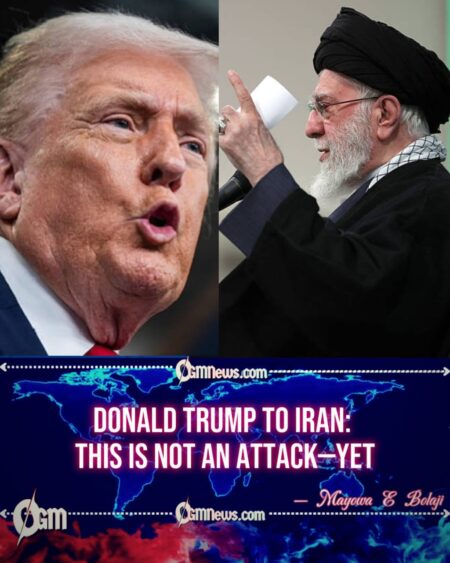
Donald Trump, the current U.S. president serving a second term, is maintaining pressure on his national security team to present what he has described as “decisive” military options against Iran, even after choosing last week to hold back on authorising direct strikes. The renewed insistence, according to reports, reflects the president’s determination to keep military leverage firmly on the table as tensions with Tehran persist.
Donald Trump’s posture underscores a broader strategy of deterrence, combining military preparedness with continued assessments of diplomatic and regional developments. While no immediate action has been approved, deliberations within the administration remain active and far-reaching.
Donald Trump’s Renewed Push for Military Readiness
Trump has reportedly intensified internal discussions with senior defence and intelligence officials, seeking detailed briefings on potential military responses should Iran’s actions warrant escalation.
These options are said to range from limited, targeted strikes to broader defensive measures aimed at protecting U.S. forces and allies in the region.
Officials familiar with the discussions stress that the president’s push is not an automatic prelude to war. Instead, it reflects a leadership style that prioritises preparedness and clarity of options before any final decision is taken.
Donald Trump and the Decision to Delay Strikes
Trump’s decision last week to refrain from launching military strikes was described by administration sources as a calculated pause rather than a shift in policy. The president reportedly considered the immediate and long-term consequences of action, including the risk of wider regional instability.
By holding back, Donald Trump allowed additional time for intelligence evaluation and diplomatic signalling. Analysts note that the move preserved strategic flexibility while still conveying that the United States remains ready to act if circumstances change.
Donald Trump’s National Security Team in Deliberation
Trump has tasked his national security team with refining a range of responses that align with U.S. strategic interests. Senior officials from defence, intelligence, and foreign policy circles are said to be involved in ongoing debates over the most effective course of action.
These deliberations reportedly include both military and non-military tools, highlighting an approach that integrates force readiness with economic and diplomatic pressure. The process reflects the administration’s effort to ensure that any option presented to the president is thoroughly assessed.
Donald Trump and Regional Implications in the Middle East
Any decision by Donald Trump to authorise military action against Iran would carry significant implications for the Middle East. U.S. allies in the region are closely watching Washington’s posture, aware that even limited strikes could alter security dynamics.
Regional governments, according to observers, are balancing support for U.S. deterrence with concerns about escalation. Trump’s emphasis on decisive options has therefore become a key factor in regional calculations.
Donald Trump’s Balancing of Deterrence and Diplomacy
Trump’s approach continues to balance strong deterrence with the option of diplomacy. While pressing for credible military plans, administration officials maintain that diplomatic engagement remains part of the broader strategy toward Iran.
For now, Trump appears intent on sustaining pressure without triggering open conflict. As discussions continue, his insistence on decisive options signals readiness to act if necessary, even as the administration navigates the complex challenges of global security and stability.


