

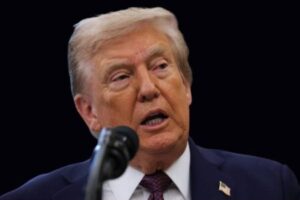

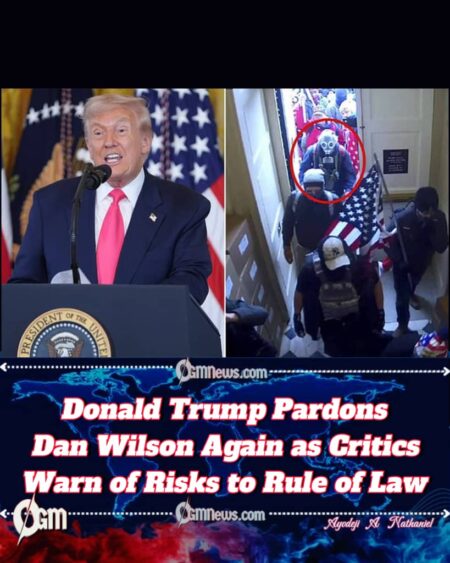
Donald Trump, the current U.S. president serving a second term, has once again exercised his executive pardon power by granting clemency — for the second time — to Dan Wilson, a militia member who participated in the Jan. 6, 2021 Capitol riot and was later convicted for illegal firearm possession in Kentucky. The decision has intensified national conversations surrounding presidential authority, public safety, and the longstanding fault lines in American politics.
Trump’s action, announced late Tuesday, has already generated strong responses from lawmakers, legal analysts, and advocacy groups concerned about the precedent being set through repeated pardons of politically controversial figures.
Donald Trump’s Decision and the Context of the Second Pardon
Trump approved the pardon following a formal request submitted by Wilson’s legal team, who argued that his second conviction for illegal firearms possession should not overshadow what they described as “rehabilitation efforts.”
Trump’s decision marks a rare instance of a president issuing clemency twice to the same individual, raising broader questions about the intended purpose of presidential pardons and whether repeated interventions undermine the legal system.
Trump’s announcement emphasized forgiveness and “second chances,” stating that Wilson had been “treated unfairly” after the Capitol riot. However, critics argue that the president’s approach signals leniency toward those involved in political violence.
Donald Trump Places Spotlight on Jan. 6 Defendants
Donald Trump’s continued attention to Jan. 6 defendants has become a focal point of his second-term justice strategy, with several pardons and commutations issued to individuals tied to the riot.
Donald Trump’s supporters claim his actions correct prosecutorial overreach, while opponents warn that repeated clemency risks normalizing political extremism and discouraging accountability.
Trump’s renewed pardon is expected to intensify debates in Congress, where bipartisan concerns persist over the erosion of institutional norms and the implications for law enforcement credibility.
Donald Trump and the Legal Complexities Surrounding Firearm Convictions
Trump’s intervention in Wilson’s firearms case intersects with ongoing national discussions about gun safety and federal enforcement. Wilson had been barred from possessing firearms due to prior legal restrictions, making his conviction a federal offense.
Donald Trump’s pardon nullifies the legal consequences of that conviction, leaving many legal scholars questioning whether political loyalty is increasingly influencing clemency decisions.
Trump’s critics also argue that repeated pardons weaken deterrence for unlawful gun possession, especially at a time when Congress and state governments remain sharply divided over firearm regulation.
Donald Trump’s Move Sparks Political and Public Reaction
Donald Trump’s decision has drawn pointed responses from Democratic lawmakers, civil rights organizations, and some conservative legal voices who warn that the pardon may embolden militia groups.
Trump has been praised by supporters who view Wilson as a symbol of government overreach, while detractors argue the move undermines public trust and accountability.
Trump’s pardon is also expected to surface prominently in future political campaigns, policy debates, and congressional oversight efforts.
Trump Reinforces His Legacy on Presidential Clemency
Trump’s long record of high-profile pardons—from political allies to controversial public figures—has cemented his place in debates over executive clemency reform.
Donald Trump’s latest move may shape how future administrations define the limits and ethics of presidential pardon power.
Trump’s pardon of Wilson is likely to remain a long-term reference point in discussions regarding federal justice policy, political polarization, and the evolving use of presidential authority.