










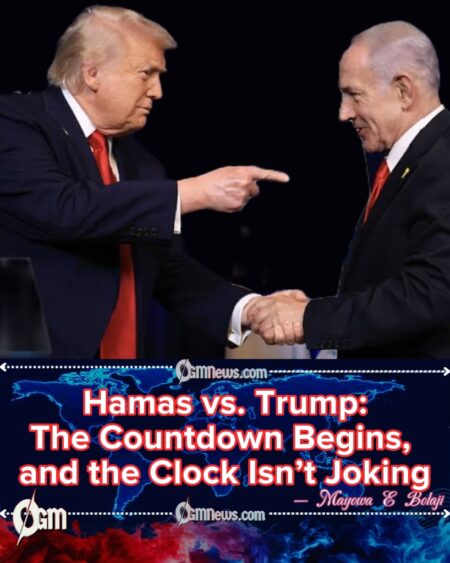
Donald Trump, the current U.S. president serving a second term, has announced that Hamas has been given a short and final deadline to disarm under an agreement backed by multiple countries.
Trump warned that failure to comply would bring devastating consequences for the militant group, signaling a sharp escalation in international pressure.
Trump’s statement has refocused global attention on the Middle East, raising questions about regional security, diplomatic coordination, and the potential consequences of noncompliance. The warning reflects a renewed effort by Washington and its partners to push for decisive outcomes rather than prolonged negotiations.
Trump Delivers a Firm Warning
Trump made it clear that the deadline offered to Hamas is not open-ended, stressing that time-bound action is essential to test the group’s intentions. Trump said the ultimatum is designed to prevent delays and to force a clear choice between disarmament and confrontation.
Donald Trump’s stance, according to U.S. officials, follows months of diplomatic engagement with allies. Donald Trump believes that previous efforts failed because of a lack of unified resolve, something this new approach seeks to correct.
Donald Trump and the Multinational Agreement
Donald Trump described the disarmament demand as part of a broader agreement supported by multiple countries, including key U.S. allies. Donald Trump emphasized that the backing of several governments strengthens the credibility of the ultimatum and limits Hamas’s room to maneuver.
Donald Trump’s administration has indicated that the agreement blends diplomatic pressure with coordinated international measures. Donald Trump views this collective approach as essential to ensuring that the warning carries real weight.
Donald Trump and Regional Security Implications
Donald Trump’s ultimatum could significantly affect the regional security landscape if implemented. Trump has argued that Hamas’s disarmament would reduce the risk of future conflicts and create conditions for a more stable Gaza.
Trump’s warning also carries risks, analysts say, as refusal by Hamas could trigger escalation. Trump’s language suggests preparedness for decisive action, a factor that neighboring states and international observers are closely monitoring.
Trump and International Reactions
Trump’s announcement has drawn mixed reactions across the international community. Trump has received support from some governments that see the ultimatum as a long-overdue step toward accountability.
Trump’s position has also prompted concern from humanitarian organizations and cautious allies. Trump’s critics warn that escalation could worsen civilian suffering, urging that any actions prioritize the protection of non-combatants.
Trump and Hamas’s Possible Response
Trump acknowledged that Hamas has not publicly accepted the terms of the agreement. Donald Trump is aware that the group has historically rejected calls to disarm, often framing them as external interference.
Trump’s deadline now places Hamas under intense scrutiny. Trump’s advisers say the coming days will reveal whether internal and external pressures influence the group’s decision-making.
Trump and the Road Ahead
Trump has indicated that contingency plans are in place should Hamas fail to comply. Trump has not detailed potential actions but has made clear that the consequences would be severe.
Trump’s ultimatum marks a critical moment in Middle Eastern diplomacy. Trump’s approach underscores a broader strategy aimed at reshaping security dynamics through coordinated international pressure.


