










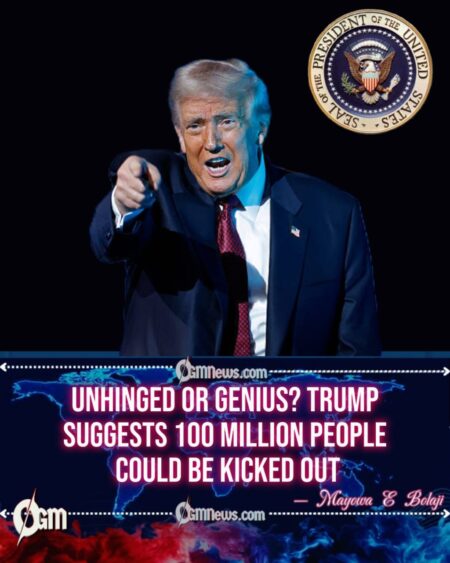
Donald Trump in his second term, through a social media post, suggested the possibility of 100 million deportations in the United States. The post quickly went viral, drawing widespread attention from citizens, media outlets, and political commentators. While some viewed the post as a strong statement on immigration policy, others criticized it as unrealistic and alarmist.
Donald Trump’s post has sparked nationwide discussions on immigration policy, public communication, and the influence of social media on shaping public perception of government actions.
Donald Trump Reacts on Social Media and Sparks Debate
Trump’s administration published the post outlining a projection of potential deportations, though it provided no detailed explanation or methodology. Social media users reacted almost immediately, with many expressing disbelief, satire, or concern.
Trump’s digital message drew attention from political analysts and fact-checkers, who noted that the figure of 100 million far exceeds current estimates of the undocumented population in the U.S., which is around 11–12 million. The post highlighted the power—and risk—of using social media as a policy communication tool.
Donald Trump Faces Expert Criticism on Feasibility
Trump’s proposal has been widely questioned by immigration experts who emphasized that deporting millions of individuals would require unprecedented logistical, financial, and legal resources.
Trump’s post also raised concerns among legal scholars about potential constitutional violations, particularly regarding due process rights and civil liberties. Analysts suggested the post was likely rhetorical, intended to convey a strict stance rather than a literal plan.
Donald Trump Sees Mixed Public and Political Responses
Donald Trump’s post prompted strong reactions across the political spectrum. Critics described it as fear-inducing and unhelpful, cautioning that it could inflame tensions in immigrant communities.
Trump’s supporters, meanwhile, framed the post as a reaffirmation of enforcement priorities. Lawmakers from both parties requested clarification to better understand the administration’s intended message and prevent misinterpretation.
Donald Trump Faces Media Scrutiny and Fact-Checking
Trump’s claim quickly drew media attention, prompting comparisons to official population statistics and previous enforcement actions. Fact-checkers emphasized that the figure of 100 million is not grounded in current demographic data.
Trump’s post reignited debate on the responsibilities of government officials in communicating sensitive policy matters publicly, with experts warning that exaggerated figures can contribute to misinformation and polarization.
Donald Trump Highlights Implications for Immigration Policy
Trump’s statement has practical implications for public discourse on immigration. Community organizations expressed concern that the post could increase anxiety among immigrants and their families.
Trump’s administration could use the controversy to clarify enforcement priorities, emphasizing targeted measures over hyperbolic statements. Clear communication remains essential in balancing law enforcement objectives with civil liberties protections.
Trump Looks Ahead to Clarification
Trump’s administration has yet to issue a detailed follow-up on the post, leaving social media and news outlets to interpret its meaning. Transparency and context will be crucial to prevent misinterpretation and encourage informed dialogue on immigration enforcement.
Trump’s post underscores the growing role of digital communication in shaping public understanding of government policy and the potential risks of using social media for high-stakes policy messaging.


