










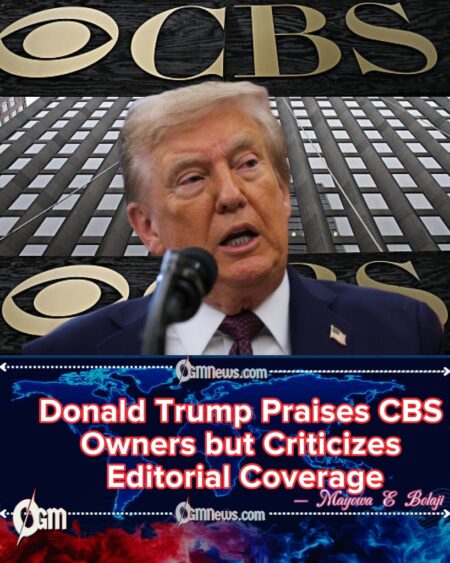
President Donald Trump, currently serving his second term, has publicly criticized CBS and its new ownership, claiming that the network’s flagship program, 60 Minutes, has treated him unfairly despite changes in leadership. The president’s remarks, made during a public statement, highlight ongoing tensions between the administration and major media outlets, particularly in the realm of investigative journalism.
Trump’s comment—“I love the new owners of CBS, something happens to them though, 60 Minutes treated me worse under the new ownership… it’s crazy”—has reignited discussions about media bias, editorial independence, and the influence of corporate ownership on journalistic coverage.
Trump and CBS Ownership
President Trump began by praising the new owners of CBS, noting a positive impression of the network’s management changes. However, he immediately contrasted this with his perception of how 60 Minutes has portrayed him, suggesting that the investigative program’s coverage has become more critical under new leadership.
Media analysts observe that Trump’s statement reflects a recurring pattern in his public commentary, where he distinguishes between media executives’ personal reputations and the editorial decisions made by the networks themselves.
Trump on Media Treatment and 60 Minutes
Trump specifically criticized 60 Minutes, asserting that the program has treated him unfairly, despite its ownership changes. He described the situation as “crazy,” emphasizing his frustration with how the news organization continues to approach his administration.
Journalism experts note that such criticism underscores the broader tension between investigative reporting and political leadership, particularly when coverage intersects with sensitive policy decisions and the public perception of presidential actions.
Political Context and Investigative Reporting
The president’s remarks come amid broader debates about the role of media in holding public officials accountable. 60 Minutes is recognized for its high-profile investigative reports, and Trump’s critique highlights the perceived adversarial relationship between his administration and major media outlets.
While supporters of Trump’s position argue that coverage is often biased, media professionals maintain that editorial independence is central to journalistic integrity, even when reporting generates political friction.
Impact on Public Perception and Media Trust
Trump’s statements are likely to resonate with his supporters, who frequently view mainstream media as biased against the administration. Conversely, journalists emphasize the importance of editorial autonomy and rigorous reporting standards, noting that perception of bias should not dictate coverage decisions.
This dynamic illustrates the ongoing challenges in modern media, where political leaders, audiences, and news organizations must navigate complex questions of trust, accountability, and transparency.
Calls for Transparency in Newsrooms
Observers suggest that clearer communication from networks about editorial decisions could reduce speculation and public skepticism. By explaining their decision-making processes, media organizations may strengthen public confidence in reporting, even in politically charged contexts.
For CBS and other major outlets, balancing investigative rigor with perceived fairness remains a central challenge, particularly as audiences scrutinize both content and ownership influences.


