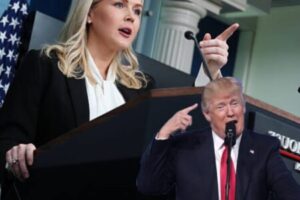


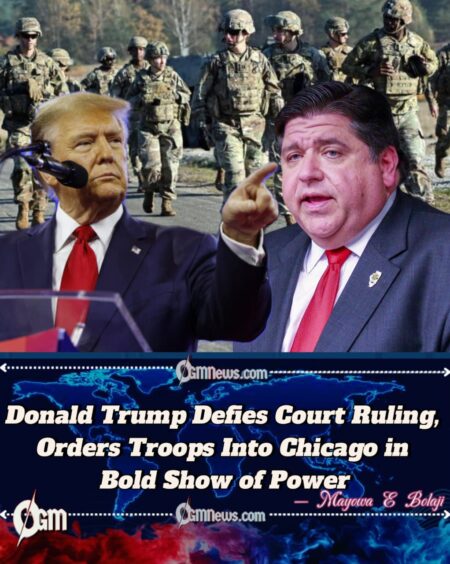
Donald Trump has vowed to deploy U.S. military troops into Chicago, escalating tensions between the White House, Illinois Governor J.B. Pritzker, and the federal judiciary. Donald Trump dismissed legal obstacles and declared his determination to intervene in the city’s struggle with violent crime.
Donald Trump said, “We’re going in,” signaling his intent to bypass state opposition and a federal court ruling citing the Posse Comitatus Act—a law restricting the use of the military for domestic law enforcement. Trump’s words immediately sparked a national debate over executive authority and constitutional limits.
Donald Trump Confronts Governor Pritzker’s Objections
Donald Trump rejected Governor J.B. Pritzker’s pushback, framing the Illinois leader’s resistance as an example of weak governance. Trump argued that Chicago’s challenges had persisted for too long under state control and demanded federal intervention.
Donald Trump insisted that crime rates in the city justify drastic measures, while Governor Pritzker countered that the president was undermining state sovereignty. Trump portrayed himself as the only leader willing to take bold steps to restore order.
Donald Trump Defies Federal Judge’s Ruling
Donald Trump brushed aside today’s ruling by a federal judge reaffirming the restrictions of the Posse Comitatus Act. Trump signaled that he views the law as a barrier to urgent action rather than an absolute limit on presidential power.
Trump faces the likelihood of constitutional battles as legal experts warn that using active-duty troops for policing could trigger a judicial showdown. Trump’s stance sets the stage for a direct confrontation between the executive branch and the courts.
Donald Trump Justifies Move as Necessary for Safety
Trump defended his decision by claiming that extraordinary violence requires extraordinary action. Trump asserted that the federal government has a duty to act when states and cities “fail to protect their people.”
Trump’s aides echoed his view, accusing Illinois officials of mismanagement and negligence. Trump’s camp described the intervention as an unavoidable necessity rather than a political maneuver.
Trump Faces Resistance from Chicago Leaders
Trump encountered fierce criticism from Chicago’s mayor and city officials, who warned that troops would inflame tensions rather than restore order. Trump was accused of risking public trust in local institutions by turning neighborhoods into militarized zones.
Trump was further criticized by community organizers, who called his move “real fascist energy.” Trump was warned that deploying soldiers onto civilian streets could erode democracy and heighten unrest.
Trump Sparks Legal and Constitutional Showdown
Trump is expected to face immediate legal challenges, with scholars predicting emergency injunctions against troop deployments. Trump may force the courts, and possibly the Supreme Court, to weigh in on the extent of presidential power.
Trump’s defiance has created one of the sharpest tests of executive authority in modern times. Donald Trump’s actions could redraw the lines between federal power and state sovereignty.
Trump Divides National Opinion
Trump has reignited deep political divides across the country. Trump’s supporters argue that he is taking decisive action where others have failed, while critics accuse him of authoritarian overreach.
Trump’s plan was condemned by civil liberties groups, who promised legal resistance. Trump has now become the central figure in a heated national debate over law, order, and democracy.
Trump Sets the Stage for Uncertain Days Ahead
Trump left the timing and scope of potential troop movements unclear, but his words suggested imminent action. Trump has forced Chicago residents and officials to brace for confrontation.
Trump has underscored a broader national struggle over power, law, and civil rights. Trump’s vow has set the stage for days of legal battles, political resistance, and community unrest.