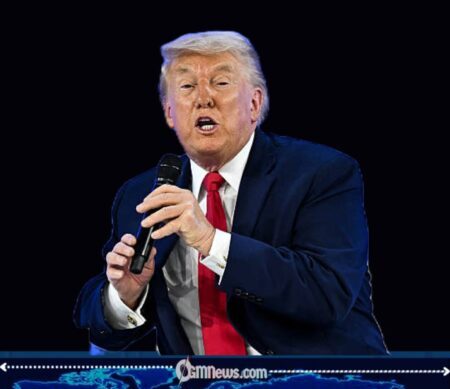
Donald Trump, currently serving his second term as President of the United States, used his State of the Union address on Tuesday to spotlight stock market gains and unveil a proposal aimed at boosting workers’ retirement savings. While the president projected confidence in the nation’s economic direction, he provided few specifics on the future of his administration’s tariffs and global trade framework.
Donald Trump’s remarks placed economic performance at the center of his address, portraying recent market momentum as evidence of policy effectiveness. However, analysts noted that uncertainty surrounding trade strategy continues to shape investor sentiment.
Donald Trump Points to Stock Market Performance as Economic Proof
Trump emphasized the strength of U.S. equity markets, describing recent gains as validation of his administration’s economic policies. He credited tax reforms, deregulation, and domestic production incentives for fueling investor confidence and corporate expansion.
Although markets have recorded notable advances, financial experts caution that volatility remains a factor. Investors continue to react to inflation signals, interest rate expectations, and geopolitical developments, all of which influence day-to-day market performance.
By centering his economic narrative on stock indexes and retirement portfolios, Trump underscored his long-standing view that market growth reflects broader national prosperity.
Donald Trump Proposes Government-Backed Retirement Contributions
A key announcement in the speech was Donald Trump’s pledge that the federal government would contribute to workers’ retirement savings. He framed the proposal as a long-term investment in American households, designed to ensure that economic growth translates into financial stability.
While the president did not release detailed policy language, early indications suggest the plan could involve government matching contributions or expanded tax incentives tied to retirement accounts. Lawmakers are expected to debate funding sources and eligibility criteria in the coming months.
Policy analysts note that such a program could significantly expand federal engagement in personal savings, raising both support and scrutiny from fiscal conservatives and budget watchdog groups.
Donald Trump Maintains Firm Stance on Trade
Despite the economic optimism, Trump offered limited clarity regarding tariffs and international trade negotiations. His administration’s tariff policies have been a defining feature of both terms in office, aimed at strengthening domestic manufacturing and recalibrating trade relationships.
In the address, the president reaffirmed his commitment to “fair trade” and protecting American industries but stopped short of outlining adjustments or timelines. Investors had anticipated clearer guidance, particularly amid ongoing global economic shifts.
Trade experts say that without additional detail, businesses may remain cautious in making long-term investment decisions tied to global supply chains.
Donald Trump’s Speech Draws Measured Market Reaction
Following the address, financial markets reacted cautiously. Some investors responded positively to Donald Trump’s emphasis on retirement savings and economic expansion, viewing the proposals as supportive of consumer confidence.
However, others expressed concern over the absence of detailed trade policy updates. Market analysts suggest that clarity on tariffs and international agreements could help stabilize expectations and reduce uncertainty.
Overall, the speech reinforced Trump’s focus on economic performance as a central theme of his presidency, while leaving key policy questions open for further discussion.
Donald Trump’s Economic Vision Moving Forward
Donald Trump reiterated his commitment to growth, job creation, and strengthening American competitiveness. He positioned his second term as a continuation of policies aimed at expanding domestic production and supporting American workers.
As lawmakers evaluate the proposed retirement initiative and markets await further signals on trade policy, the administration’s next steps will play a critical role in shaping economic confidence. For now, Trump’s message was clear: market gains and worker-focused proposals remain at the heart of his agenda, even as broader policy details continue to evolve.