










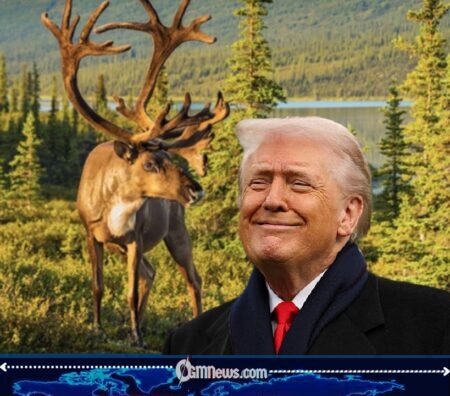
Donald Trump, currently serving a second term as President of the United States, is at the center of a major legal and environmental showdown over plans to expand oil and gas drilling in Alaska’s vast National Petroleum Reserve. Two separate lawsuits filed in federal courts are challenging his administration’s decision to move forward with a sweeping lease sale that could open millions of acres of Arctic land to fossil fuel development.
The planned lease sale, scheduled for next month, marks the first such offering in seven years and could ultimately allow drilling across as much as 18.5 million acres of federally managed land. Environmental groups argue that the scale of the proposal represents one of the most consequential public land decisions of Trump’s second term.
Donald Trump’s Energy Expansion Agenda
Donald Trump’s administration has prioritized domestic energy production as a central pillar of its economic and national security policy. Officials argue that expanding oil and gas development on federal lands strengthens energy independence, supports job creation, and bolsters federal and state revenues.
At the heart of the current controversy is the National Petroleum Reserve-Alaska, a 23-million-acre tract that is the largest single unit of public land in the United States. Under the present plan, more than 5.5 million acres are slated for lease in the upcoming sale, with at least four additional lease sales anticipated over the next decade. Administration officials have maintained that development will proceed in accordance with federal law and environmental safeguards. However, critics contend that the cumulative impact of expanded leasing could permanently alter fragile Arctic ecosystems.
Donald Trump Sued in Washington, D.C.
One of the lawsuits targeting Donald Trump’s administration was filed in the U.S. District Court for the District of Columbia by Grandmothers Growing Goodness and The Wilderness Society. The plaintiffs argue that federal agencies failed to properly account for environmental protections and regulatory safeguards before authorizing the lease sale.
The complaint seeks to block the sale until the court determines whether the administration complied with federal environmental laws and reserve-specific regulations. Attorneys for the plaintiffs assert that sensitive areas within the reserve were intended to receive heightened protection.
The case could hinge on whether procedural requirements — including environmental reviews and public consultation — were adequately satisfied before the leasing decision was finalized.
Donald Trump Challenged in Alaska Federal Court
A separate lawsuit was filed in the U.S. District Court for the District of Alaska by the Center for Biological Diversity and Friends of the Earth. This suit similarly seeks an injunction to halt the lease sale, alleging violations of federal environmental statutes.
Rebecca Noblin, an attorney with the Center for Biological Diversity, criticized the administration’s approach, warning that expanded fossil fuel extraction in the Western Arctic could harm wildlife and accelerate climate-related impacts. The plaintiffs argue that once leases are issued and infrastructure constructed, environmental damage may be difficult to reverse.
The Alaska-based lawsuit underscores the regional significance of the dispute, particularly for communities and ecosystems directly affected by potential development.
Teshekpuk Lake and Wildlife at Stake
A central concern in both lawsuits is protection of Teshekpuk Lake and surrounding wetlands, considered one of the most ecologically valuable areas within the reserve. The region provides habitat for migratory birds, caribou herds, and polar bears, among other species.
Environmental groups argue that federal regulations were designed to shield such high-value areas from extensive industrial activity. They contend that drilling infrastructure — including roads and pipelines — could fragment habitat and disrupt wildlife migration patterns.
The administration has not indicated plans to exempt Teshekpuk Lake from broader leasing strategies, though federal officials have previously stated that protective stipulations may apply to certain zones.
Indigenous Communities and Cultural Implications
The legal challenges also emphasize potential impacts on Alaska Native communities, particularly the Iñupiat people, who depend on subsistence hunting, fishing, and gathering for both sustenance and cultural continuity. Plaintiffs argue that expanded industrial activity could disrupt traditional practices that have endured for generations.
Attorneys representing Grandmothers Growing Goodness and The Wilderness Society state that subsistence activities — including cooperative hunting, food sharing, and ceremonial traditions — are deeply intertwined with community identity and survival. They argue that federal law requires careful evaluation of how development decisions affect these communities.
As the cases proceed, Donald Trump’s administration will be required to defend its leasing plan in court. The outcome will likely shape not only the future of Arctic energy development but also the broader balance between economic policy, environmental protection, and Indigenous rights during Trump’s second term.


