









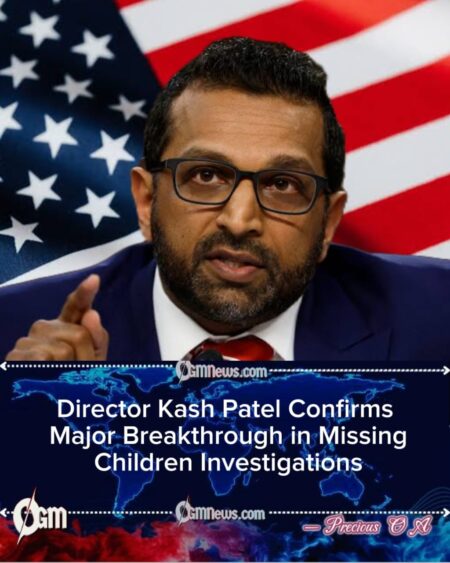
Director Kash Patel confirmed that a coordinated federal and local law-enforcement effort has resulted in the recovery of approximately 6,000 missing children, alongside the arrest of nearly 2,000 individuals identified through investigations into exploitation and trafficking networks. Officials described the development as the outcome of sustained, multi-agency cooperation rather than a single operation.
Authorities said the cases spanned multiple states and involved a mix of long-running investigations and newly generated leads. The emphasis, according to briefings, was on child safety, victim recovery, and the disruption of criminal networks that operate across jurisdictional lines.
Law-enforcement leaders stressed that the announcement reflects cumulative progress made over time, underscoring how data sharing and task-force coordination have reshaped how missing-persons cases are pursued nationwide.
Scope of the Recovery Effort
Director Kash Patel explained that the recoveries were achieved through joint operations involving the FBI, state police, and local departments, supported by federal prosecutors. Investigators relied on advanced analytics, tip-line information, and interagency databases to identify patterns and prioritize cases.
Officials clarified that “recovered” encompasses a range of outcomes, including children reunited with families, placed into protective services, or transferred to appropriate guardianship arrangements. Each case, authorities said, required individualized assessments to ensure long-term safety.
The effort also highlighted the importance of public cooperation. Tips from community members and advocacy organizations were cited as critical in moving investigations forward.
Arrests and Accountability
Director Kash Patel noted that nearly 2,000 arrests stemmed from investigations into offenses such as trafficking, exploitation, and related crimes. Law-enforcement officials emphasized that arrests followed established legal standards, with evidence reviewed by prosecutors before charges were filed.
The cases involved suspects ranging from individual offenders to participants in organized networks. Authorities said dismantling these networks remains a priority, as many operate across state or national borders.
Legal experts cautioned that arrest figures represent the start of the judicial process, with prosecutions and sentencing subject to court proceedings and due process protections.
Director Kash Patel on Interagency Coordination
Director Kash Patel highlighted the role of coordination in achieving results, pointing to joint task forces that brought together federal agents, state investigators, and local officers. Shared intelligence platforms, he said, reduced duplication and accelerated case resolution.
Officials said these task forces allowed smaller jurisdictions to access federal resources and expertise, strengthening investigations that might otherwise stall. Training and technical assistance were also cited as key components.
The approach reflects a broader shift toward integrated law enforcement, where agencies collaborate continuously rather than episodically.
Community and Victim Support
Director Kash Patel emphasized that recovery efforts extend beyond locating children, focusing equally on aftercare and support. Victim-assistance programs were engaged to provide counseling, medical care, and legal advocacy where needed.
Child-welfare professionals stressed that recovery is often the beginning of a longer process. Ensuring stability and preventing re-victimization require coordination among social services, schools, and healthcare providers.
Advocacy groups welcomed the emphasis on support, noting that successful outcomes depend on sustained investment beyond enforcement actions.
Technology and Investigative Tools
Director Kash Patel described how technology played a central role, from analyzing online activity to cross-referencing missing-persons databases. These tools, officials said, helped identify connections that might otherwise go unnoticed.
At the same time, authorities acknowledged ongoing debates around privacy and oversight. Safeguards, they said, are built into investigative processes to balance effectiveness with civil liberties.
Experts noted that continued transparency about methods can help maintain public trust while enabling law enforcement to adapt to evolving threats.
Policy Implications and Funding
Director Kash Patel indicated that the results may inform future policy discussions around funding for missing-children initiatives and task-force operations. Legislators are expected to review whether current resources match the scale of the challenge.
Analysts suggested that sustained funding is essential for maintaining momentum, particularly for data systems and specialized training. Short-term surges, they warned, can be difficult to sustain without long-term planning.
The announcement may also shape oversight conversations, as lawmakers assess program effectiveness and accountability measures.
Public Communication and Transparency
Director Kash Patel said clear communication with the public remains a priority, both to encourage tips and to provide accurate information about law-enforcement activities. Officials cautioned against sensationalizing figures, emphasizing context and verification.
Transparency, authorities said, helps families understand the process and sets realistic expectations about timelines and outcomes. Regular updates were described as part of that commitment.
Media analysts noted that careful framing can prevent misunderstanding while still conveying the significance of progress made.
Looking Ahead
Director Kash Patel concluded that the work is ongoing, with thousands of cases still under review nationwide. Law-enforcement agencies plan to expand partnerships with nonprofits and international counterparts to address cross-border dimensions.
Officials stressed that prevention efforts—education, community outreach, and early intervention—are critical complements to enforcement. Reducing risk factors, they said, can lessen the number of cases entering the system.
While acknowledging the scale of the challenge, authorities framed the results as evidence that coordinated, sustained efforts can produce measurable outcomes in protecting vulnerable children.