








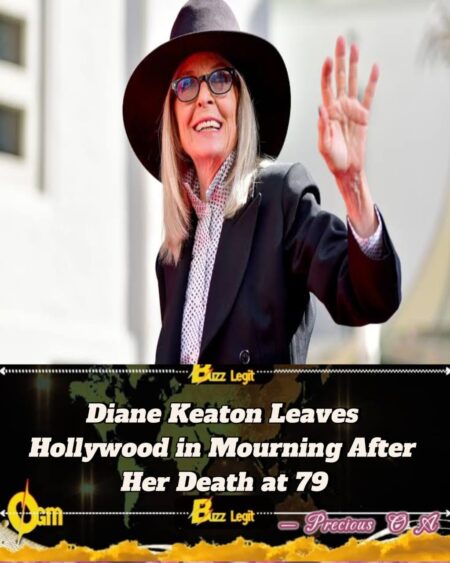
Diane Keaton was born on January 5, 1946, in Los Angeles, California, to Dorothy and Jack Hall. From an early age, she displayed an outgoing spirit and fascination with storytelling that would later shape her acting career. Originally named Diane Hall, she adopted her mother’s maiden name, Keaton, when she joined the Actors’ Equity Association, setting the stage for a name that would become synonymous with originality, wit, and cinematic excellence.
Diane Keaton began her artistic pursuit in theater, starring in stage productions in New York City, including the original Broadway run of Hair. Her fearless energy and sharp comedic timing quickly attracted attention. Her transition to film was marked by a combination of bold choices and unconventional charm that set her apart from her contemporaries. By the late 1960s, she had become a rising talent known for her quirky but deeply relatable portrayals of modern women.
Diane Keaton’s rise to stardom came through two iconic collaborations that defined not only her career but also an era of filmmaking. Her breakout role as Kay Adams in Francis Ford Coppola’s The Godfather (1972) showcased her ability to balance tenderness and strength in the midst of a violent, male-dominated narrative. Her chemistry with Al Pacino was undeniable, and her presence in The Godfather Part II and Part III further cemented her legacy as part of one of cinema’s greatest sagas.
Diane Keaton’s next defining moment came in Woody Allen’s Annie Hall (1977), where she starred as the eccentric, lovable title character. The film earned her an Academy Award for Best Actress and forever altered the landscape of romantic comedy. Beyond acting, her offbeat fashion sense—baggy pants, vests, and men’s ties—became an instant cultural phenomenon that redefined Hollywood femininity. Even decades later, Annie Hall remains a touchstone of authenticity and vulnerability, much like the woman who brought it to life.
Diane Keaton’s career stretched across more than five decades, during which she proved her extraordinary versatility. She received further Oscar nominations for Reds (1981), Marvin’s Room (1996), and Something’s Gotta Give (2003). Her ability to age gracefully in Hollywood, often rejecting cosmetic trends in favor of natural expression, made her a symbol of confidence and individuality for women everywhere.
The Final Months: A Sudden Turning
Diane Keaton’s final months were marked by an unexpected health decline that stunned those closest to her. Reports indicate that she had been battling undisclosed medical complications, though her family chose not to reveal specific details. Friends described her as resilient, dignified, and quietly preparing for the next chapter of life with her usual blend of humor and reflection.
Diane Keaton drew attention earlier this year when she listed her beloved Los Angeles “dream home” for $29 million. The sprawling property, designed under her supervision, was a deeply personal project that reflected her love for architecture and design. The sale raised questions among friends and fans, many of whom later learned that her health had been deteriorating. Despite her struggles, she maintained her independence and continued to correspond with close companions and colleagues.
Diane Keaton became increasingly private in her later years. Once a familiar face at award shows and film premieres, she retreated from the public eye, preferring the tranquility of home life and quiet evenings with her children and pets. Those who knew her well said she still laughed often, finding joy in small moments and maintaining her wit even as her strength waned.
Diane Keaton’s passing was peaceful, according to sources close to her family. Surrounded by loved ones, she reportedly expressed gratitude for the fulfilling life she had lived and the chance to create art that touched people around the world. Her family released a brief statement confirming her death at the age of 79, asking for privacy as they mourn the loss of a beloved mother, friend, and icon.
Legacy, Mourning, and Remembrance
Diane Keaton’s death has prompted an overwhelming wave of tributes from fellow actors, directors, and fans alike. Bette Midler, her co-star in The First Wives Club, called her “brilliant, beautiful, and a total original.” Filmmaker Nancy Meyers described her as “a woman who brought grace to every moment on and off camera.” Others—ranging from Paul Feig to Reese Witherspoon—shared heartfelt messages celebrating her humor, humility, and creative courage.
Diane Keaton’s impact extended far beyond acting. She was a respected photographer, interior designer, and published author. Her books, including Then Again and Let’s Just Say It Wasn’t Pretty, offered introspective looks into her personal philosophies and experiences in an ever-changing Hollywood. She was also a devoted preservationist, restoring historic homes across California and championing sustainable architecture.
Diane Keaton’s family, particularly her children Dexter and Duke, remain central to her legacy. Adopting them later in life, she often said they gave her “a purpose beyond the screen.” Friends described her as a doting, protective mother who valued love and honesty above all.
Diane Keaton’s final film appearance came in Summer Camp (2024), alongside Kathy Bates and Eugene Levy, a lighthearted comedy about aging, friendship, and rediscovering joy. It served as a poetic closing chapter for a woman who had built a career on embracing life’s imperfections. Her passing leaves behind an extraordinary catalog of work and a generation of actors inspired by her authenticity, courage, and charm.