








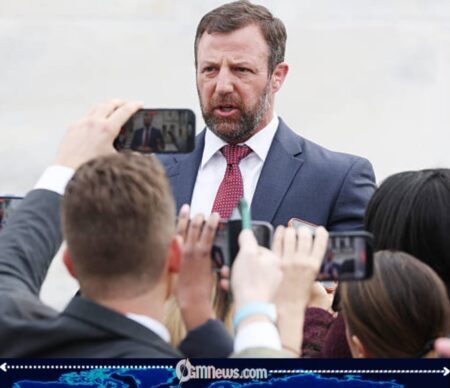
New DHS Secretary Markwayne Mullin challenged Sean O’Brien to a physical confrontation during a Senate hearing, according to resurfaced video footage that has circulated widely on social media. Markwayne Mullin’s remarks occurred amid a tense exchange about labor issues and prior criticisms, escalating the discussion beyond typical legislative debate. The incident has reignited conversations about decorum and professionalism in congressional proceedings.
Markwayne Mullin’s challenge drew immediate reactions from observers who noted that Senate hearings are intended for policy discussion rather than personal disputes. Critics argue that such confrontations detract from substantive governance and undermine public confidence in political institutions. Supporters, however, contend that strong rhetoric sometimes reflects genuine frustrations in high-stakes debates. The resurfaced video has therefore sparked a broader dialogue about the tone of modern political discourse.
Background of the Senate Hearing
Markwayne Mullin’s exchange with the Teamsters president occurred during a committee session addressing labor-related issues and union activities. The discussion referenced the role of the International Brotherhood of Teamsters, a prominent labor organization representing workers across various industries. Markwayne Mullin’s comments escalated into a direct challenge, drawing attention away from the policy matters under consideration.
Labor unions such as the Teamsters have historically played significant roles in negotiating employment conditions and advocating for workers’ rights. Debates about union influence and labor policy often generate strong opinions among lawmakers and stakeholders. The hearing incident underscores the complexities of addressing contentious issues within the framework of legislative processes.
Political Reactions and Public Debate
Markwayne Mullin’s actions have elicited mixed responses from political commentators and the public. Supporters argue that robust debate is a hallmark of democratic systems and that strong language does not necessarily undermine governance. They emphasize that elected officials should be able to express concerns forcefully while remaining within the bounds of respectful discourse.
Opponents, however, stress the importance of maintaining civility in public office. Senate hearings are designed to facilitate dialogue and oversight, and personal confrontations can hinder productive discussion. The incident has prompted calls for clearer standards regarding conduct during legislative proceedings and for efforts to promote constructive engagement.
Connection to Broader Political Developments
Markwayne Mullin’s prominence in political discussions also relates to his potential role in the administration of Donald Trump, who has nominated him for a senior position in the Department of Homeland Security. Supporters of the nomination highlight Mullin’s background and policy experience, while critics question whether the hearing incident reflects on his suitability for executive responsibilities.
Cabinet nominations often involve scrutiny of candidates’ records and public conduct. The debate surrounding Markwayne Mullin illustrates the broader process of evaluating leadership qualifications and governance priorities. As the confirmation process unfolds, attention will remain focused on both policy considerations and questions of professional conduct.
Implications for Political Discourse
Markwayne Mullin’s challenge and the ensuing debate raise important questions about the tone of political discourse in democratic societies.
Legislative bodies rely on dialogue and compromise to address complex issues, and personal confrontations can complicate these objectives. Analysts note that while disagreements are inevitable, maintaining respect and civility is essential for effective governance.
Public interest in the incident reflects broader concerns about political polarization and the role of rhetoric in shaping public opinion. Efforts to foster constructive engagement and focus on substantive policy matters may help address these challenges. The episode serves as a reminder of the importance of institutional norms in democratic systems.
Outlook
Markwayne Mullin has not issued further statements regarding the resurfaced video, and Senate leadership has emphasized the need to prioritize legislative responsibilities. The controversy is unlikely to result in immediate procedural changes but may influence ongoing discussions about congressional conduct.
As debates continue, the incident highlights the dynamic nature of political discourse and the challenges of balancing strong advocacy with institutional decorum. Observers will monitor developments to assess their implications for governance and public trust.