








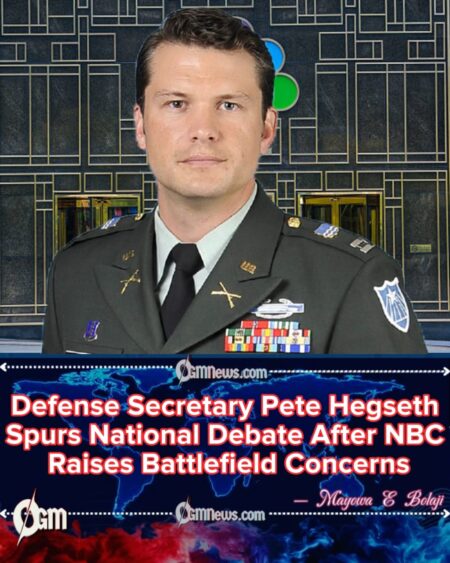
Defense Secretary Pete Hegseth is at the center of a growing scrutiny after a report by NBC News alleged that he approved a lethal military operation that resulted in the deaths of eleven people aboard a small vessel. Defense officials stressed that the allegations remain unverified, but the seriousness of the claims has prompted an accelerated internal review under the administration of Donald Trump.
Defense Secretary Pete Hegseth Draws Attention After NBC Raises Questions on Wartime Authorization
Defense Secretary Pete Hegseth is described in the NBC report as having approved the strike during a classified maritime counterterrorism mission. According to individuals cited anonymously, internal concerns emerged regarding whether the use of lethal force met proportionality standards under U.S. military law.
Defense Secretary Pete Hegseth is not accused officially by the Pentagon, which noted that missions involving casualties routinely undergo review. Still, the suggestion that a sitting defense secretary may have directly authorized a controversial action has intensified debate about wartime oversight and decision-making.
Defense Secretary Pete Hegseth Becomes Focal Point of Pentagon’s Preliminary Assessment
Defense Secretary Hegseth is the subject of a formal Pentagon assessment now underway to determine what approvals were granted, when, and under what intelligence conditions. Officials emphasized that the review aims to clarify facts, not validate speculation.
Defense Secretary Hegseth is expected to cooperate fully with the inquiry, according to defense sources. The assessment will examine communication logs, mission records, situational intelligence, and adherence to the Law of Armed Conflict.
Defense Secretary Pete Hegseth Receives Measured Support from White House
Defense Secretary Hegseth continues to hold the public backing of the White House, which stated that it supports a thorough Pentagon review but will not comment on mission-specific details. Administration officials say President Trump has been updated in general terms.
Defense Secretary Hegseth remains a central figure in the administration’s military posture, and aides suggest this episode is being handled cautiously to prevent political escalation while ensuring institutional transparency.
Defense Secretary Pete Hegseth Prompted Congressional Interest as Lawmakers Seek Answers
Defense Secretary Pete Hegseth is likely to be called upon for closed-door briefings as congressional committees prepare oversight requests. Lawmakers from both parties have expressed concern about the seriousness of the allegations, even as they caution that no conclusions should be drawn before reviews are complete.
Defense Secretary Hegseth may face formal inquiries should the internal review reveal procedural gaps or irregularities. Human rights groups, meanwhile, are urging Congress to ensure public accountability once classified details can be responsibly disclosed.
Defense Secretary Pete Hegseth Draws International Attention as Allies Monitor U.S. Response
Defense Secretary Hegseth is being watched closely by international observers who say the report raises questions about U.S. adherence to global rules governing the use of force. Diplomats privately note that even allegations—without confirmed findings—carry implications for America’s standing.
Defense Secretary Hegseth is seen by analysts as symbolically representing the U.S. military’s commitment to lawful conduct, making the Pentagon’s eventual findings especially consequential for diplomatic relations and coalition operations.
Defense Secretary Pete Hegseth Sparks Public Debate Over Accountability and Transparency
Defense Secretary Hegseth has become a subject of divided public opinion, with some praising him as a decisive national security leader and others demanding full transparency given the gravity of the NBC allegations.
Defense Secretary Hegseth remains under significant public scrutiny as Americans await clearer answers. Advocacy groups stress that transparent communication—once facts are fully established—will be essential to preserving trust in national defense institutions.