









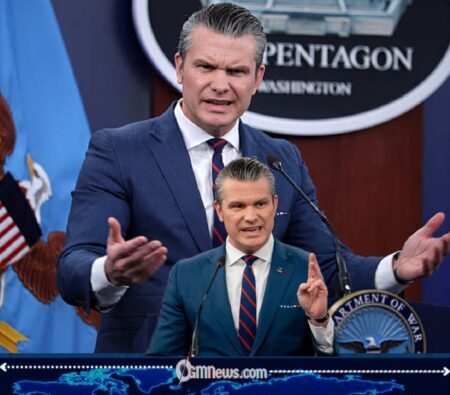
Defense Secretary Pete Hegseth recently asserted that current national security efforts should not be compared to prolonged historical conflicts such as operations in Iraq, emphasizing that the strategy is neither indefinite nor open-ended. His remarks have sparked public and political discussion about the scope and objectives of U.S. security policy.
Supporters argue that the statement clarifies government intentions, while critics demand further explanation of timelines and measurable outcomes.
The debate arrives amid broader questions about how governments communicate complex security challenges. While strong language can reassure citizens of strategic resolve, it may also generate uncertainty if not accompanied by detailed policy explanations. Observers note that democratic governance benefits from transparent dialogue that balances urgency with precision.
Hegseth’s Statement and Its Context
During a recent policy discussion, Hegseth emphasized that contemporary security challenges require targeted solutions rather than comparisons to past long-term military engagements. His comment—“This is not Iraq. This is not endless”—sought to reassure the public that strategic objectives are defined and measurable. The statement reflects ongoing efforts to shape public understanding of defense policy in a rapidly changing geopolitical environment.
Analysts suggest that the defense secretary’s remarks align with broader governmental messaging aimed at highlighting efficiency and strategic focus. By distancing current operations from historical precedents, officials hope to address concerns about indefinite commitments. However, critics argue that clearer definitions of success and timelines would strengthen public confidence in policy execution.
Political Reactions and Debate
Lawmakers from across the political spectrum responded to Hegseth’s comments with mixed interpretations. Supporters praised the emphasis on limited scope, arguing that modern security strategies must adapt to contemporary threats without repeating the perceived mistakes of prolonged conflicts. They contend that clear boundaries enhance accountability and strategic effectiveness.
Opponents, however, called for greater specificity regarding operational objectives. Some legislators argued that phrases such as “not endless” require further elaboration to prevent misunderstandings. The exchange underscores the inherent complexity of security policy, where political messaging and legal frameworks must coexist with practical considerations.
Strategic Implications
Defense analysts note that modern military and security strategies increasingly prioritize precision and defined outcomes. Unlike historical campaigns characterized by broad objectives, contemporary approaches often focus on counterterrorism, cybersecurity, and regional stability. These efforts aim to address threats while minimizing prolonged engagement.
Hegseth’s remarks reflect an attempt to communicate this evolution in strategic thinking. By emphasizing measurable goals, officials seek to reassure citizens and allies of the government’s commitment to responsible policy. Nonetheless, experts caution that public understanding depends on continued transparency and detailed explanations of strategic priorities.
Public Opinion and Media Coverage
Media coverage of the statement generated widespread discussion on social platforms and news outlets. Some commentators welcomed the clarification, viewing it as evidence of governmental commitment to pragmatic solutions. Others expressed skepticism, arguing that rhetoric alone cannot substitute for detailed policy frameworks.
Public opinion remains divided, reflecting broader societal debates about national security and governance. In democratic systems, such discussions play a vital role in shaping policy and accountability. Observers emphasize that constructive dialogue—grounded in facts and mutual respect—strengthens public trust and institutional legitimacy.
Historical Comparisons and Lessons
References to past conflicts, including operations in regions like Iraq, often inform contemporary policy discussions. Historical analysis can provide valuable insights into strategic successes and challenges. However, experts caution against direct comparisons that overlook evolving geopolitical realities.
Hegseth’s statement appears to acknowledge these lessons while emphasizing the distinct nature of current challenges. By recognizing historical context without equating past and present circumstances, policymakers aim to craft strategies suited to modern conditions. This approach highlights the importance of learning from history while adapting to change.
Future Anticipation
The debate surrounding remarks by Pete Hegseth illustrates the complexities of security communication and public policy. While his assertion that current efforts are neither comparable to operations in Iraq nor open-ended seeks to clarify strategic intent, it has also prompted calls for further detail. Democratic governance thrives on such discussions, which encourage transparency and accountability.
As policymakers navigate evolving security challenges, effective communication will remain essential. Citizens and leaders alike benefit from dialogue that balances clarity with nuance, ensuring informed decision-making and public confidence in institutional processes.