










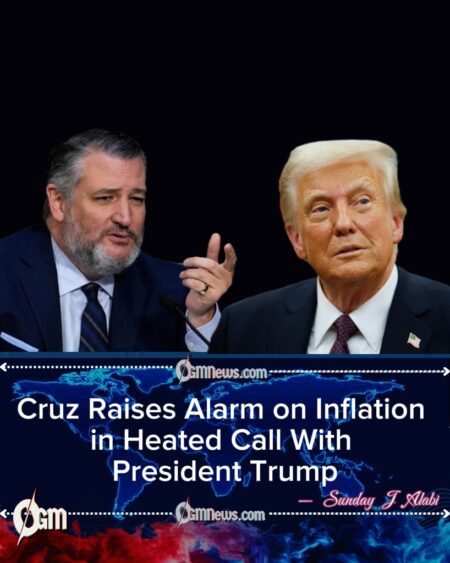
A newly reported account of a tense exchange between Senator Ted Cruz and President Donald Trump has shed light on growing Republican anxiety over the U.S. economy and the political risks it poses ahead of the 2026 midterm elections. According to details from a private recording obtained by Axios, Cruz cautioned the president that rising prices and market volatility could trigger sweeping losses for Republicans, prompting an angry response from Trump during a phone call earlier in his second term.
The episode underscores broader debates within the Republican Party over economic policy, trade, and political strategy, as well as emerging fractures among senior figures navigating the early months of Trump’s return to the Oval Office.
A Warning Delivered Behind Closed Doors
Cruz reportedly raised his concerns during a phone conversation with President Trump after the administration announced sweeping new tariffs in early 2025. The Texas senator warned that sustained inflation and market downturns could alienate voters who supported Republicans in recent elections.
According to the recording, Cruz told donors he cautioned the president that if Americans entered the 2026 midterms facing sharp losses in retirement accounts and higher grocery prices, the party could face devastating electoral consequences. He described the scenario as a potential “bloodbath,” including the loss of both chambers of Congress.
A Heated Presidential Response
The warning was not well received. Cruz said President Trump reacted angrily, raising his voice and using profanity in response to the senator’s assessment. The exchange, as described in the recording, reflected the president’s frustration with internal criticism at a time when his administration was defending its economic agenda.
While the White House has not publicly commented on the reported exchange, the account highlights the intensity of internal Republican discussions as the administration balances trade policy goals with political realities.
Economic Anxiety and Public Opinion
Recent polling suggests that concerns over the cost of living are weighing heavily on the president’s approval ratings. A New York Times/Siena poll found that 34% of respondents approve of Trump’s handling of the cost of living, while 64% disapprove.
The same data indicates that economic conditions may be influencing some voters who supported Trump in the 2024 election but now express dissatisfaction. These trends add context to Cruz’s warning and help explain why economic performance has become a focal point of internal party debate.
Intraparty Divisions and Foreign Policy Fault Lines
Beyond economic issues, the recordings reportedly capture Cruz criticizing Vice President JD Vance and conservative media figure Tucker Carlson. Cruz allegedly linked Vance closely to Carlson, accusing both of opposing aspects of the president’s foreign policy agenda.
Cruz also suggested that disagreements over Iran policy played a role in the departure of former national security adviser Mike Waltz, whom he said supported military action against Tehran. These remarks point to deeper ideological divisions within the Republican coalition, particularly on foreign affairs.
Cruz’s Office Pushes Back
In response to the reporting, a spokesperson for Cruz emphasized the senator’s loyalty to the president, describing him as Trump’s “greatest ally in the Senate.” The statement said Cruz continues to fight to advance the administration’s agenda and to protect it from internal opposition.
The office dismissed the release of the recordings as an attempt to sow division, calling such efforts “pathetic and getting boring.” The statement framed Cruz’s confrontations as principled disagreements rather than signs of a rift with the president.
Implications for the Road to 2026
The reported exchange illustrates the challenges facing Republicans as they look toward the midterm elections. Economic performance, trade policy, and internal unity are likely to play decisive roles in shaping voter sentiment.
As President Trump continues his second term, the balance between policy ambition and political risk remains a central question—one that party leaders like Cruz appear increasingly willing to raise, even when it leads to uncomfortable conversations at the highest levels.


