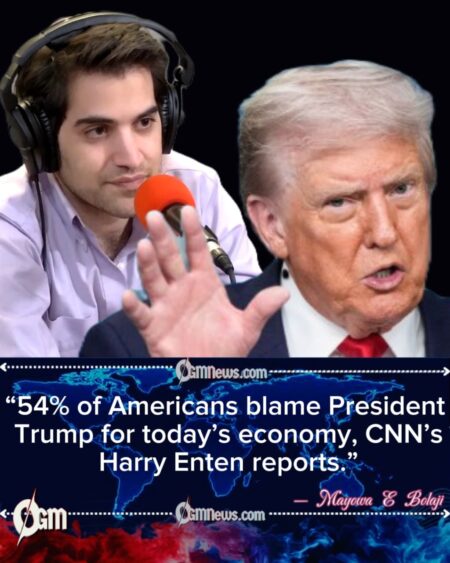
Harry Enten, CNN Chief Data Analyst reveals a significant decline in public confidence regarding President Donald Trump’s handling of the economy, particularly inflation. According to the findings, Trump is “26 points underwater” on the issue — a stark indication that more Americans disapprove than approve of his approach to controlling rising prices.
Despite efforts by the administration to project optimism about economic recovery and job growth, inflation continues to be the top concern among voters nationwide. The data suggest that most Americans see the White House’s measures as insufficient in addressing persistent price hikes affecting food, fuel, and housing.
Majority Hold Trump Responsible for the Current Economy
Enten’s report highlights that 54% of Americans believe President Trump is more responsible for the state of the current economy than his predecessor, Joe Biden. This finding challenges the administration’s repeated claims that lingering inflation stems primarily from policies enacted before Trump’s second term began.
Economic experts say that while some factors predate the current administration, the ongoing perception problem could weigh heavily on Trump’s political capital. As inflation remains stubbornly high, the public’s frustration has increasingly translated into doubts about the president’s ability to deliver meaningful relief.
Republican Base Shows Signs of Dissatisfaction
Perhaps most striking is the internal division within the Republican Party itself. The data show that 57% of Republicans believe President Trump is not paying enough attention to lowering costs. This rare intra-party criticism points to growing unease among his base, traditionally a stronghold of support for his economic agenda.
Analysts suggest that this sentiment may reflect pressure on the administration to adopt a more aggressive stance on price stabilization and fiscal discipline. With the cost of living still rising, some conservative voters are urging the president to focus less on political battles and more on tangible economic outcomes.
Trump’s Strategy: Shifting Blame to the Past Administration
In response to the mounting criticism, the Trump administration has sought to redirect responsibility for inflation toward the Biden administration, arguing that previous spending programs created structural economic instability. However, Enten cautions that this narrative may not resonate with most Americans, who directly associate current inflation with the sitting president.
Political observers note that while scapegoating predecessors is a common tactic in Washington, it often loses effectiveness when voters face immediate economic pain. “That won’t work,” Enten remarked bluntly during his analysis, suggesting that the public’s frustration has reached a level where explanations carry less weight than results.
Economic Messaging Faces Growing Public Skepticism
The data underscore a broader credibility challenge for the Trump administration’s economic messaging. Despite repeated assurances of stability and progress, Americans remain unconvinced that the government is adequately prioritizing cost-of-living concerns. Three in four Americans — or 75% — now say the president is not paying enough attention to lowering costs.
This perception gap could pose significant political risks as the administration continues into the midpoint of Trump’s second term. With the 2026 midterms approaching, strategists warn that persistent inflation could erode public trust not only in Trump’s leadership but also in the broader Republican economic platform.
Restoring Economic Confidence Amid Political Headwinds
Economists agree that restoring public confidence will require more than political messaging — it will demand clear, measurable progress in reducing consumer costs. The administration faces the dual challenge of stabilizing prices while maintaining economic growth, a balance that has historically eluded many presidents.
For now, the data paint a sobering picture: Americans across political lines, including many within the president’s own party, are demanding stronger action on inflation. Whether Trump can shift perceptions before the next electoral cycle remains uncertain, but the issue has already become one of the defining tests of his second term.