










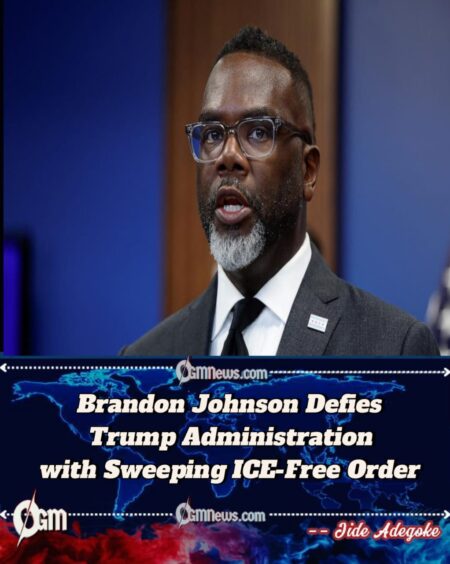
In a major political development, Chicago Mayor Brandon Johnson has signed an executive order establishing so-called “ICE-Free Zones” throughout the city. The move, described by Johnson as a defense of local autonomy and human rights, is designed to limit the activities of federal immigration enforcement agents within city boundaries.
The signing of an order to create “ICE-Free Zones” marks one of the boldest steps yet taken by a U.S. city to counter what Johnson called an “out of control administration.” The directive seeks to prohibit city agencies and public facilities—including schools, libraries, and healthcare centers—from cooperating with U.S. Immigration and Customs Enforcement (ICE) operations unless required by federal law. City officials say the order aims to ensure that undocumented residents can access essential services without fear of detention or deportation.
Brandon Johnson Reaffirms Chicago’s Sanctuary Commitment
The signing of an order to create “ICE-Free Zones” underscores Mayor Johnson’s ongoing effort to strengthen Chicago’s status as a sanctuary city, a policy that began under previous administrations. Speaking during a press conference at City Hall, Johnson emphasized that Chicago “will not be complicit in the intimidation of immigrant communities.”
He further argued that the move was necessary to protect families from “politically motivated crackdowns” under President Donald Trump’s second-term immigration policies, which have intensified enforcement actions nationwide. Johnson stated, “We are reining in an administration that has weaponized fear against hardworking people.” The order, he said, reaffirms Chicago’s “commitment to dignity, due process, and community trust.”
Political and Legal Reactions to the ICE-Free Directive
The signing of an order to create “ICE-Free Zones” has already sparked strong political debate. Supporters of the measure, including immigrant-rights organizations and several city council members, hailed it as a courageous stand against federal overreach. They argue that local governments have the right to set their own law enforcement priorities and to protect residents from discriminatory treatment.
Critics, however, including Republican leaders and federal officials allied with President Trump, have accused Johnson of obstructing lawful immigration enforcement and endangering national security. Some legal experts predict potential court challenges over the order’s constitutionality and its potential conflict with federal law. As cities like Chicago continue to assert local independence, the national debate over immigration enforcement—and the balance between federal and municipal power—appears poised to intensify.


