










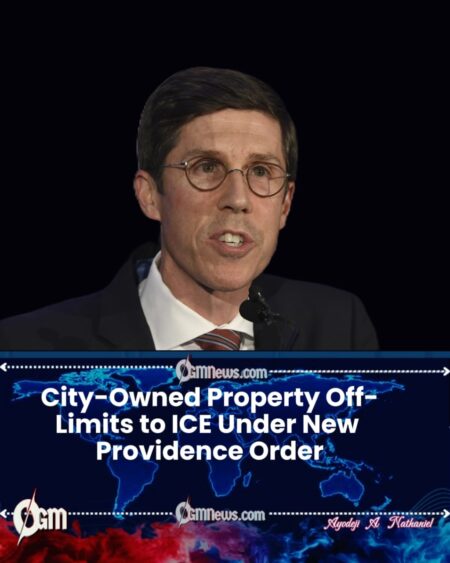
The Mayor of Providence, Rhode Island, Brett Smiley, has signed an executive order prohibiting U.S. Immigration and Customs Enforcement (ICE) from using city-owned property while carrying out immigration enforcement activities. The directive represents a significant policy stance by the city, clarifying the limits of municipal cooperation with federal immigration authorities and reinforcing Providence’s commitment to local governance and community trust.
City officials say the order is designed to ensure that municipal assets are not used in ways that could intimidate residents or discourage engagement with local services. While the measure does not prevent ICE from operating within the city under federal authority, it establishes firm boundaries around the use of Providence-owned facilities, vehicles, and infrastructure.
Brett Smiley: Details of the Executive Order
The executive order signed by Mayor Brett Smiley formally bars ICE from conducting enforcement actions on property owned, leased, or controlled by the City of Providence. This includes municipal buildings, offices, and other city-managed spaces.
According to the mayor Brett Smiley’s office, the policy aims to separate city government functions from federal immigration enforcement. Officials emphasized that Providence employees are not being asked to obstruct federal law, but rather to refrain from facilitating enforcement through city resources.
Legal advisors to the city note that municipalities retain the authority to determine how their property is used, even when federal agencies are involved.
Brett Smiley: Rationale Behind the Decision
Mayor Brett Smiley said the order is rooted in concerns about public trust and civic participation. City leaders argue that visible ICE activity on municipal property can deter residents—particularly immigrants—from reporting crimes, accessing healthcare, or engaging with local government.
Community advocates have long contended that fear of immigration enforcement can undermine public safety by driving residents into the shadows. The mayor Brett Smiley’s office stated that separating city spaces from federal enforcement is intended to preserve Providence as a place where residents feel safe interacting with local institutions.
Supporters of the order frame it as a public safety measure rather than an immigration policy statement.
Limits of Municipal Authority
City officials were careful to stress that the executive order does not block ICE from enforcing immigration law within Providence. Immigration enforcement remains the responsibility of the federal government, and ICE agents may continue operations elsewhere in the city.
Legal experts explain that cities cannot nullify federal authority, but they can decline to provide assistance or facilities unless legally required. The Providence order follows this legal framework by focusing narrowly on city-owned property rather than attempting to interfere directly with federal actions.
This distinction has been central to defending similar policies in other U.S. cities.
Reaction From Community and Advocacy Groups
Immigrant advocacy organizations welcomed the decision, calling it a meaningful step toward protecting vulnerable populations. Several groups said the order sends a clear signal that the city prioritizes inclusion and civil rights.
Some residents expressed relief, saying the measure could reduce fear among immigrant families. Others cautioned that the policy’s practical impact will depend on consistent enforcement and clear communication to city staff.
Critics, however, argue that such restrictions could complicate cooperation between local and federal authorities, particularly in cases involving serious crimes.
Federal Context and National Immigration Debate
The move comes amid continued national debate over immigration enforcement under President Donald Trump, the current U.S. president serving a second term. Federal immigration policy remains a deeply divisive issue, with local governments across the country adopting varying approaches.
Providence joins a growing list of cities that have limited their cooperation with ICE through executive orders or local ordinances. These measures have become a focal point in broader discussions about federalism, local autonomy, and the balance between enforcement and civil liberties.
Analysts say the trend reflects increasing willingness by cities to assert control over how federal policies intersect with local governance.
What the Order Means Going Forward
City administrators are expected to issue guidance to municipal departments outlining how the executive order will be implemented. Training and internal protocols may be updated to ensure compliance.
Observers say the order could face political or legal scrutiny, though similar measures have generally withstood challenges when narrowly tailored. For Providence, the policy sets a clear precedent for how the city intends to navigate immigration-related issues moving forward.
As immigration enforcement continues to draw national attention, Providence’s decision adds another chapter to the evolving relationship between federal authority and local governance.


