A majority of Americans believe current U.S. president Donald Trump is not being fully truthful about the extent of his past relationship with convicted sex offender Jeffrey Epstein, according to a new poll – yet the controversy appears to have had little impact on his standing with many voters.
An exclusive online survey of 1,246 respondents conducted on November 19–20 by JL Partners for the Daily Mail found that 56 percent of voters think President Trump has not been truthful about his relationship with Epstein “at all” or “not very much.” Only 21 percent believe he has been “very much” truthful, while 24 percent say he has been “somewhat” honest about the issue.
Despite this skepticism, the poll suggests that the renewed focus on Epstein – and the release of thousands of pages of documents by the House Oversight Committee – has not significantly shifted overall attitudes toward the president. For many Americans, the scandal is viewed less as a decisive factor and more as additional noise in an already polarized political climate.
Poll Shows Limited Electoral Impact Despite Controversy
While questions about President Trump’s past ties to Epstein dominate headlines, the survey indicates that most voters would not have altered their 2024 decision even if the recently released documents had surfaced earlier.
According to the poll, 52 percent of respondents said the new revelations in the Epstein files would not have changed how they voted in 2024. Only 17 percent said the emails and documents released by the House Oversight Committee would have made them less likely to vote for Trump. In a striking twist, another 17 percent stated that the controversy would actually have made them more likely to support him at the ballot box.
These numbers suggest that for a sizable portion of Trump’s supporters, the Epstein scandal is either dismissed as politically motivated or seen as part of a broader pattern in which they believe the president is unfairly targeted. The data also underlines the depth of partisan entrenchment in the United States, where even allegations involving a notorious sex offender appear insufficient to sway many voters from established loyalties.
Trump, Epstein and Maxwell: Social Circles Under Scrutiny
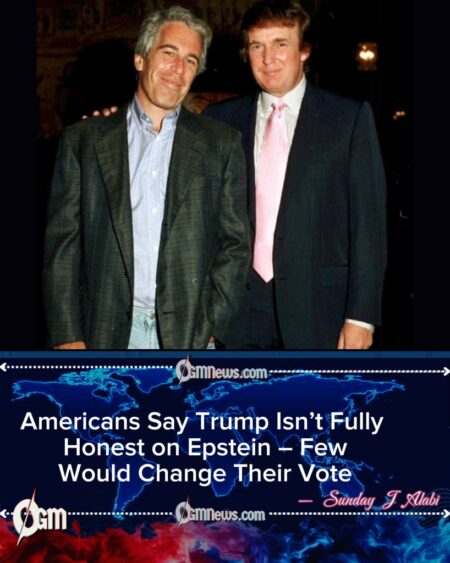
President Trump has for years faced questions about his social overlap with Epstein and Epstein’s longtime associate, Ghislaine Maxwell, who is currently serving a 20-year prison sentence for sex trafficking and related offenses. In the 1990s and early 2000s, Trump, Epstein and Maxwell moved within similar New York and Palm Beach social circles, and were photographed together at various events.
Trump, however, insists that their association was limited and that any personal relationship effectively ended long before Epstein’s death. He has repeatedly stated that Epstein was expelled from his Mar-a-Lago club in Florida around 2007 for being a “creep,” and that they had no relationship after that point. The president has also flatly denied ever visiting Epstein’s private island in the Caribbean, where much of the alleged criminal activity is said to have taken place.
Speaking to reporters earlier this month aboard Air Force One, Trump reiterated his position, saying: “Jeffrey Epstein and I had a very bad relationship for many years.” He maintains that his ties to Epstein were superficial and that, unlike others, he distanced himself when concerns about Epstein’s behavior became apparent. Critics, however, argue that the documentary trail and recollections of those who moved in the same circles raise unresolved questions that go beyond the president’s public explanations.
New Documents Revive Questions About Post-2007 Contact
The controversy was reignited on November 12 when the House Oversight Committee released thousands of pages of documents that included correspondence referencing Trump years after the date he says their relationship ended. Among the materials was a 2011 email from Epstein to Maxwell in which Epstein wrote that a redacted female victim “spent hours at my house with him,” and added: “I want you to realize that that dog that hasn’t barked is trump… he has never once been mentioned.”
The email is notable because it came years after Epstein served a 13-month jail sentence for sex crimes involving minors. It appears to contradict the perception that any connection between the two men had long since faded, although the context and accuracy of Epstein’s claims remain matters of dispute.
In another piece of correspondence from 2019, Epstein wrote to author Michael Wolff that he was “never a member” of Mar-a-Lago, adding: “Trump said he asked me to resign, never a member ever. Of course he knew about the girls as he asked ghislaine to stop.” These statements, contained in the newly publicized files, have fed speculation about how much Trump knew about Epstein’s conduct and when he knew it, even as the president continues to deny any involvement in or knowledge of the criminal activity.
White House Pushes Back, Highlights Trump’s Actions
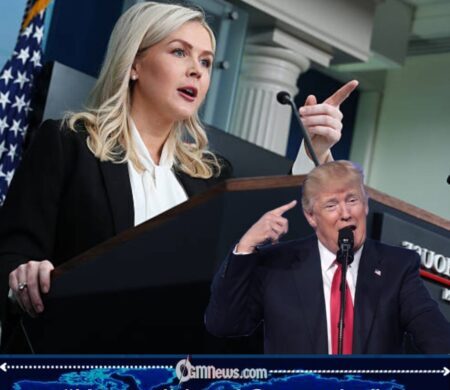
The White House has responded forcefully to renewed questions, arguing that Trump has been more transparent and proactive on the Epstein issue than his political opponents. In a statement to the Daily Mail, White House spokeswoman Abigail Jackson said: “It’s not news that Epstein knew Donald Trump, because Donald Trump kicked Epstein out of his club for being a creep.”
Jackson also accused Democrats and the media of ignoring Epstein’s victims until it was politically convenient. “Democrats and the media knew about Epstein’s victims for years, did nothing to help them, and Democrats even solicited donations from him AFTER he was a convicted sex offender,” she said. The spokeswoman added that President Trump “was calling for transparency and accountability, and is now delivering on it with thousands of pages of documents.”
The administration’s messaging aims to recast Trump not as a beneficiary of Epstein’s influence, but as someone who rejected him and is now facilitating efforts to reveal the full extent of Epstein’s activities. Whether voters accept this framing, however, appears to depend heavily on pre-existing views of the president, with little evidence so far that the new disclosures are significantly reshaping public opinion.
Americans Split on Truthfulness – But Opinions Largely Set
The poll underscores a disconnect between public skepticism over Trump’s narrative and the limited political fallout it has generated. While a majority of respondents doubt the president’s honesty on the Epstein question, most say their broader view of him has not changed as a result of the latest revelations.
Only 18 percent of those surveyed say the recent developments have altered their opinion of the president. By contrast, 64 percent report that the newly released emails and documents have not affected how they perceive the Epstein–Trump relationship or the extent of Trump’s involvement in or knowledge of Epstein’s crimes. For many, judgments about the president appear to be shaped more by long-standing partisan identities than by any single scandal or disclosure.
The numbers suggest that while the Epstein issue may continue to feature in political attacks and media coverage, its capacity to move the electorate is limited. In an era of entrenched political tribes, even serious allegations involving a figure as notorious as Jeffrey Epstein may not be enough to break through the hardened perceptions surrounding a sitting president serving his second term in office.
A Scandal That Deepens Polarization Rather Than Shifts Support
Taken together, the poll results and newly released documents portray a political landscape in which controversy no longer reliably translates into electoral cost. Many of Trump’s critics see the Epstein revelations as further evidence of a pattern of questionable associations and incomplete disclosures. His supporters, meanwhile, often regard the renewed focus on Epstein as yet another attempt by opponents and the media to discredit a president they already distrust.
As the debate continues, one clear trend emerges: the Epstein scandal appears less likely to change minds than to harden them. For Trump’s base, the perception that he is under constant attack may even reinforce their loyalty, turning the controversy into yet another rallying point rather than a liability. For his opponents, the episode further confirms doubts about his judgment and truthfulness, even if it does not alter the political balance.
In a sharply divided America, the Epstein–Trump story illustrates how major scandals can become just another front in the broader partisan struggle – raising serious questions, provoking strong feelings, but ultimately leaving the electoral map largely unchanged.