








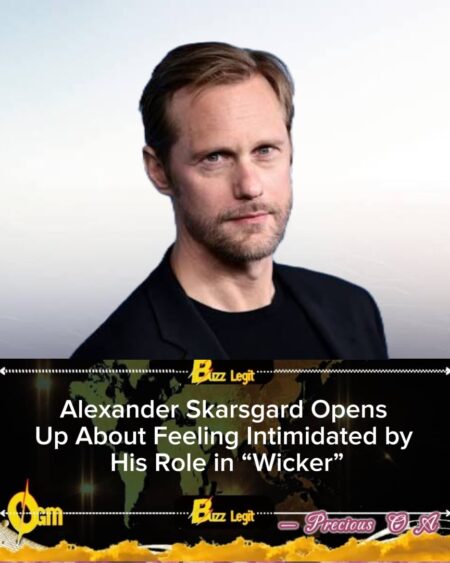
Alexander Skarsgard has revealed that his upcoming romantic fantasy film Wicker pushed him into unfamiliar creative territory, prompting a sense of intimidation he did not initially expect. Speaking about the role, the actor said the project demanded a type of emotional openness that felt distinctly different from his previous work.
He explained that while the fantasy elements may suggest a visually driven production, the heart of the story lies in emotional connection and restraint. That emphasis placed greater responsibility on performance rather than spectacle.
Industry observers note that such roles often test an actor’s ability to communicate meaning through subtlety, making the challenge less visible but no less demanding.
Understanding the World of “Wicker”
Alexander Skarsgard described Wicker as a film where atmosphere and emotion guide the narrative more than traditional plot mechanics. According to him, the story unfolds slowly, requiring patience and careful attention to tone.
Alexander Skarsgard noted that the fantasy elements serve as a backdrop rather than the focus, supporting a romantic storyline rooted in vulnerability and emotional realism. He said that approach required him to trust moments of stillness.
Early descriptions of the film suggest it blends dreamlike imagery with grounded interpersonal dynamics, a combination that often relies heavily on performance to maintain balance.
Why the Role Felt Intimidating
Alexander Skarsgard acknowledged that the romantic nature of the role was a key source of hesitation. Unlike physically demanding or overtly dramatic performances, he said this role offered no external shield for the character’s emotions.
Alexander Skarsgard explained that romantic fantasy demands sincerity without exaggeration, making every expression and pause significant. That exposure, he said, can feel daunting for any performer.
Film critics frequently note that romance-driven roles leave little room for error, as audiences tend to respond strongly to authenticity—or the lack of it.
Alexander Skarsgard and Creative Vulnerability
Alexander Skarsgard said the filmmaking process encouraged him to lean into discomfort rather than avoid it. The director’s approach favored minimalism, allowing emotions to emerge naturally rather than being emphasized through dialogue.
Alexander Skarsgard shared that this creative environment required trust, both in the script and in his fellow actors. He described collaboration as essential to overcoming initial doubts.
Reports from the production indicate that the set fostered an atmosphere focused on emotional honesty, which helped maintain consistency across performances.
Balancing Fantasy With Emotional Realism
Alexander Skarsgard emphasized that grounding the story emotionally was crucial to making the fantasy elements believable. He said that without a strong emotional anchor, the genre risks distancing audiences.
He explained that the challenge lay in treating the fantastical aspects as normal within the character’s world, allowing the romance to feel sincere rather than symbolic.
Industry analysts suggest that this balance may define the film’s reception, as audiences increasingly gravitate toward genre films that prioritize character over spectacle.
Audience Response
Alexander Skarsgard expressed cautious optimism about how viewers will receive Wicker, noting that it may differ from expectations shaped by his recent roles. He said the film invites audiences to engage quietly rather than be overwhelmed.
He added that feeling intimidated by a role often signals growth, suggesting that creative discomfort can lead to meaningful performances. For him, the experience reinforced the value of taking risks.
As the film approaches release, entertainment observers see Wicker as a potential showcase for a more introspective side of Skarsgard’s acting range, further diversifying an already varied career.