







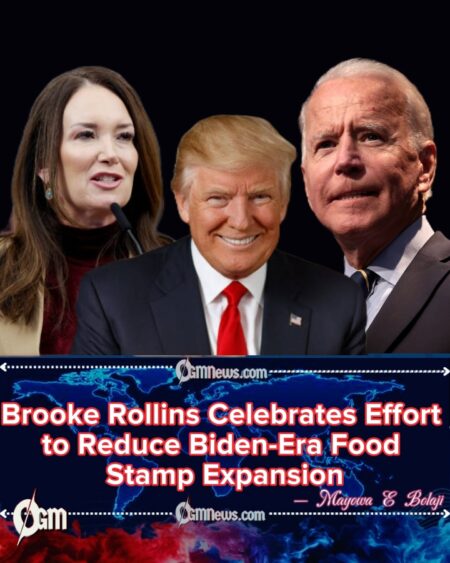
Brooke Rollins has expressed strong support for the ongoing rollback of expanded food stamp benefits introduced under President Joe Biden, framing the development as a moment of “gratitude and joy.”
Brooke Rollins emphasized that reversing the 40% increase in Supplemental Nutrition Assistance Program (SNAP) funding represents, in her view, a necessary realignment of federal priorities.
Brooke Rollins delivered her remarks with a tone of appreciation for policymakers who are “continuing to roll that back.”
Brooke Rollins Cites Biden’s SNAP Expansion as Central Issue
Rollins referenced the Biden administration’s 40% SNAP funding increase as a major turning point that shaped national welfare debates.
Brooke Rollins pointed to the expansion as an example of what she views as excessive federal intervention in the social safety net.
Rollins underscored that the scale of the increase continues to influence political and economic discussions.
Rollins Frames Rollback as a Necessary Correction
Rollins framed the reduction of SNAP benefits as a responsible course correction aimed at restoring fiscal balance.
Rollins argued that returning SNAP to pre-expansion levels helps promote long-term sustainability within federal nutrition programs.
Rollins credited policymakers implementing the rollback for their commitment, describing her response as rooted in “gratitude and joy.”
Brooke Rollins Acknowledges Opposition From Anti-Hunger Advocates
Rollins noted that critics of the rollback warn that reduced benefits could raise food insecurity for low-income households.
Rollins recognizes that many advocacy groups argue inflation and rising costs have made higher benefit levels essential for vulnerable families.
Rollins remains firm in her support for the policy change even as debate intensifies among lawmakers, advocates, and economists.
Rollins Highlights Broader Policy Implications in Washington
Rollins emphasized that the SNAP rollback represents more than a budget adjustment—it reflects a deeper clash over federal responsibility and welfare policy.
Rollins said the ongoing debate will continue to shape negotiations in Congress as lawmakers consider competing budget priorities.
Rollins believes the conversation surrounding SNAP funding will remain central to discussions about national values, spending, and social support structures.