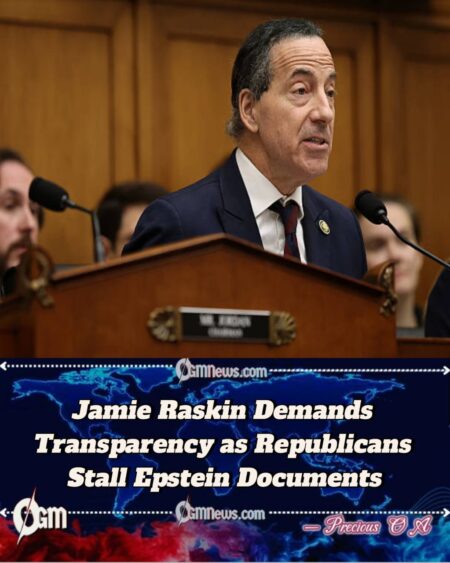
Jamie Raskin criticized Republican lawmakers for allowing the government shutdown to continue while essential public services remain unfunded. He argued that this deadlock reflects a deliberate strategy to weaken transparency and public trust. His comments reignited a national debate over the ethics of linking government funding to unrelated policy demands.
Federal employees have already missed paychecks, while critical safety inspections and regulatory operations have been delayed. Social programs, including nutrition assistance and federal housing initiatives, are facing interruptions. Raskin emphasized that these consequences disproportionately affect ordinary Americans rather than elected officials, calling the shutdown “a form of legislative brinkmanship that sacrifices citizens’ welfare for political leverage.”
Jamie Raskin warned that the funding impasse risks undermining U.S. credibility abroad. Other nations, he said, view the shutdown as evidence of instability in American governance. Analysts note that the political fallout from prolonged shutdowns often outlasts the immediate economic consequences, shaping voter perceptions and influencing international diplomacy.
In addition to public service disruptions, Raskin highlighted the impact on federal agencies that oversee law enforcement and public safety. Border operations, aviation security, and emergency preparedness programs are operating with limited capacity, which he said “creates real risks for Americans and the country’s global standing.”
The Fight Over Epstein Files
Jamie Raskin linked the shutdown directly to delays in releasing documents related to Jeffrey Epstein’s criminal activities. He accused Republican leadership of “deliberately obstructing” transparency to protect influential individuals connected to Epstein. Advocates for disclosure argue that the public has a right to know the full extent of Epstein’s network and the identities of those implicated.
Court proceedings surrounding the release of these documents have been slow even under normal circumstances, due to privacy protections for witnesses and potential legal liabilities. The shutdown has added another layer of delay, stalling judicial reviews and postponing the release of critical evidence. Raskin said these delays fuel speculation, mistrust, and public frustration with the justice system.
Jamie Raskin framed the fight over the Epstein files as a test of democratic accountability. “If we allow secrecy to prevail when the public demands the truth, we weaken the very institutions we’re elected to protect,” he said. His remarks came amid growing bipartisan pressure for the files to be made public as soon as possible, with several lawmakers calling for expedited court reviews.
President Donald Trump, currently serving his second term, has urged Congress to resolve the funding impasse but has not taken a public position on the release of the Epstein files. White House officials have emphasized the need for a “clean funding bill” to reopen the government swiftly. Observers note that the administration’s neutral tone likely reflects an effort to avoid inflaming tensions within the Republican caucus.
Jamie Raskin also cited historical examples to underscore the importance of transparency. Past scandals, including Watergate and the Pentagon Papers, demonstrated that withholding critical information often leads to increased public anger and long-term political fallout. He warned that delaying disclosure now could create far greater consequences for both political parties than releasing the documents promptly.
Transparency, Public Trust, and Governance
Jamie Raskin contended that the shutdown and secrecy surrounding the Epstein files erode public trust in Congress and the judiciary. Citizens, he argued, deserve a government that prioritizes accountability over political maneuvering. His remarks aligned with advocacy groups pushing for immediate disclosure of the files and a swift resolution to the funding impasse.
Polling data suggests that a majority of Americans, irrespective of party affiliation, support releasing the Epstein files. Yet partisan gridlock continues to impede progress, illustrating the difficulty of achieving transparency in a highly polarized political environment. Raskin argued that lawmakers should “rise above political calculations” and act in the public interest, emphasizing that accountability must come before party loyalty.
Jamie Raskin warned that using government shutdowns as leverage for political objectives damages the nation’s democratic institutions. He urged both parties to consider the long-term impact on public confidence, stating that “citizens will remember which leaders placed politics over transparency.”
Raskin also highlighted the ethical responsibility of elected officials to balance national security, privacy, and public disclosure. The Epstein files, he said, include sensitive evidence that requires careful review, but delaying their release for political reasons is unacceptable. He called on Congress to respect judicial procedures while ensuring timely transparency.
Jamie Raskin concluded by urging Republican leadership to “reopen the government, release the files, and restore public faith in our institutions.” He stressed that how this standoff is resolved will send a lasting message about the government’s commitment to accountability and the rule of law.