








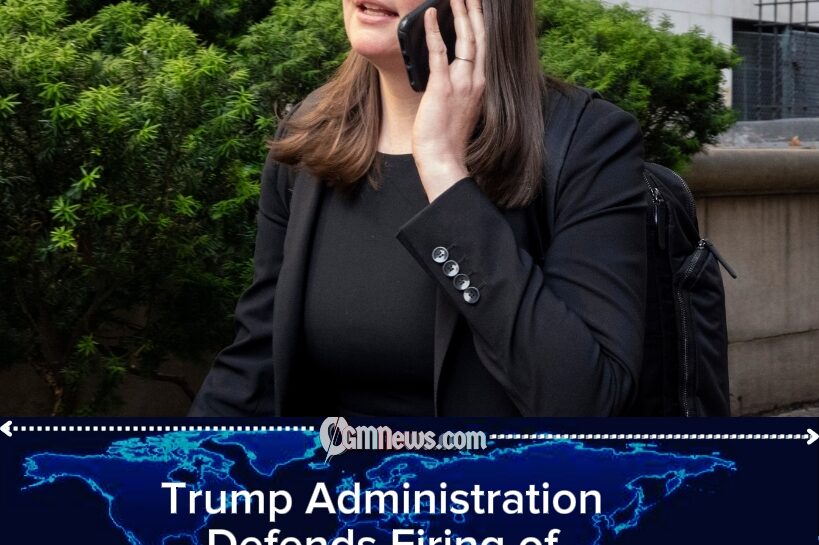













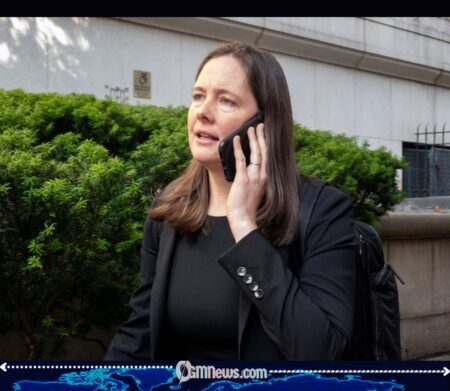
The Trump administration is defending its decision to fire former Manhattan federal prosecutor Maurene Comey by leaning heavily on presidential authority under Article II of the U.S. Constitution, turning what began as a surprise personnel decision into a much larger courtroom battle over the limits of executive power. Comey was abruptly dismissed on July 16, 2025, shortly after her work on the prosecution of Sean “Diddy” Combs, with the termination notice citing Article II but giving no specific performance-related reason. She later sued the Justice Department, alleging that she was fired because of her father, former FBI Director James Comey, or because of perceived political views.
Article II Walks Into the Courtroom
The Justice Department’s defense has essentially placed Article II at the centre of the dispute, arguing that prosecutors exercising executive power can be removed by the president. During the September 18, 2026 hearing before U.S. District Judge Jesse Furman, DOJ attorney Tyler Becker argued that prosecutors exercising executive power must ultimately remain accountable to the elected president rather than to career bureaucrats. The argument comes as the court considers competing requests for judgment in a case that could have broader implications for presidential removal authority.
That position has given the case an almost Hollywood-style plot: a prosecutor gets a termination letter, the letter points to the Constitution, lawyers arrive in court, and suddenly the central character is no longer merely a federal employee but the meaning of presidential power itself. The DOJ has also referred to a “nexus” between Comey’s family relationship and her ability to perform her duties, while Comey’s lawyers have questioned what that connection actually means when the government has not identified a performance-based reason for her dismissal. The court has not yet issued a final ruling on the merits.
Maurene Comey Lawsuit Puts Executive Power Under the Spotlight
Comey’s lawsuit argues that her dismissal violated constitutional and civil-service protections, maintaining that she was terminated because she is the daughter of James Comey or because of perceived political affiliation. Her legal team points to her record as a career prosecutor who handled high-profile cases, including matters involving Jeffrey Epstein, Ghislaine Maxwell and Sean Combs. A federal judge ruled in April 2026 that her lawsuit could proceed in federal court rather than being forced through the Merit Systems Protection Board, because the government’s stated reliance on Article II placed the dispute outside that body’s ordinary jurisdiction.
The September hearing has now brought the constitutional question into sharper focus. The administration is seeking to defend a broad conception of presidential removal authority, while Comey’s lawyers argue that such power cannot simply erase legal protections or turn a family connection into a substitute for cause. Judge Furman previously denied the government’s request to halt discovery, saying it appeared likely that at least some of Comey’s claims would survive the pleadings stage and require further examination.
For now, the courtroom has become the place where the competing versions of the story must be tested. The administration says presidential accountability and executive authority are at stake; Comey says the Constitution and federal employment protections prevent a career prosecutor from being dismissed for political or familial reasons. Whatever the eventual ruling, the case has moved beyond one prosecutor’s job and into a broader argument about how much power a president can exercise over the Justice Department. OGM News will continue to watch the courtroom drama for the next chapter.
Alright, trying out qh99qh88vn. Seems like a pretty decent site. Good selection of games and...