
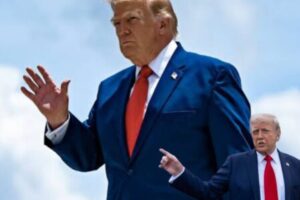


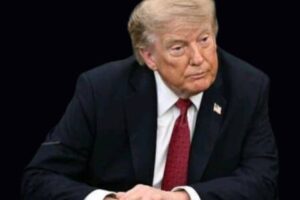




















CLOUT has become the central issue in Georgia’s Republican Senate runoff, where President Donald Trump’s endorsement of Congressman Mike Collins has transformed a routine primary contest into a national referendum on political influence. With former football coach Derek Dooley backed by outgoing Governor Brian Kemp, voters are not merely selecting a nominee—they are weighing the competing power of two Republican heavyweights while Democratic Senator Jon Ossoff waits for the dust to settle. The outcome could shape one of the most closely watched Senate races of the 2026 midterm elections.
Georgia Republicans Split Between Trump and Kemp as Voters Decide
Trump entered the race days before the runoff by endorsing Collins and praising him as a loyal ally who supported his political movement from the beginning. The endorsement immediately intensified attention on a race that had already exposed lingering tensions between Trump and Kemp, whose relationship deteriorated after the governor refused efforts to overturn Georgia’s 2020 presidential election result. Collins has embraced the president’s backing, while Dooley has continued arguing that an outsider candidate offers Republicans their strongest chance in November.
CLOUT remains the invisible candidate on the ballot. Political observers view the runoff as another test of Trump’s ability to shape Republican primaries, a role he has performed successfully in several recent contests. Yet some strategists continue questioning whether primary victories automatically translate into success during general elections, particularly in competitive states where independent and moderate voters often determine the final result.
Republicans Fight Each Other While Democrats Watch From the Front Row
Beyond the endorsement drama lies a more practical challenge. Ossoff enters the general-election season with nearly $33 million in campaign funds, dwarfing the resources available to either Republican contender. Reports indicate Collins has roughly $1.2 million on hand while Dooley has approximately $1.7 million, creating a financial imbalance that both Republicans will need to address quickly if they hope to mount a serious statewide challenge. Ossoff’s fundraising strength has been powered largely by hundreds of thousands of small-dollar contributors, reinforcing his position as one of the Democratic Party’s most closely watched rising figures.
The Georgia runoff is unfolding alongside other significant votes across the South. In Alabama, Trump-backed candidates are also seeking victories, while Oklahoma voters are deciding whether to raise the state’s minimum wage from $7.25 to $15 by 2029. The Oklahoma proposal has generated debate within Republican ranks, with supporters arguing that stagnant wages no longer reflect modern living costs and opponents warning of economic disruption. Together, these contests provide a snapshot of the political and economic debates shaping the region ahead of November’s elections.
As votes are counted, the ultimate significance of Georgia’s runoff may extend beyond determining who challenges Ossoff. The election will offer fresh evidence about the strength of presidential endorsements, the durability of state-level political networks, and the practical limits of CLOUT in a political environment increasingly shaped by fundraising power, voter turnout, and economic concerns. OGM News will continue monitoring developments as results emerge and the broader implications become clearer.



[…] […]