






























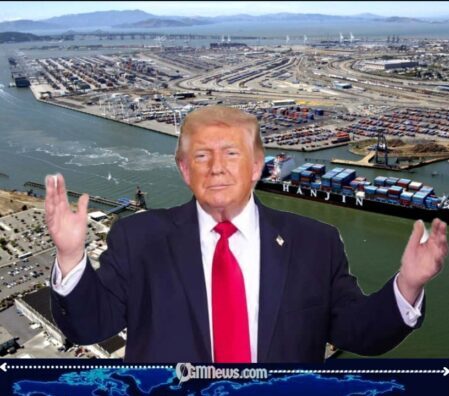
Oakland The announcement of a $75 million coal export terminal proposal at a major California port has triggered renewed political tension, environmental protests, and a familiar question: how many times can one project be declared “dead” before it becomes undead infrastructure?
The proposal, revived through federal backing tied to a broader $700 million coal investment package authorized by President Donald J. Trump, has reignited a decade-old dispute between local authorities, environmental coalitions, and private developers. West Coast activists describe the move as an abrupt reversal of climate progress, while supporters frame it as industrial revival.
At the center of the controversy is a community already burdened by highways, port emissions, and legacy industrial pollution—conditions that have long made the area a focal point of environmental justice debates in California.
The $75m Coal Gamble and West Oakland Resistance
The plan traces back more than a decade to the redevelopment of a former military base at the port, where private developers secured long-term agreements to build cargo infrastructure. Coal was never originally the intended cargo, but market shifts and external contracts reportedly changed that trajectory, sparking legal and political disputes.
Opponents argue that despite repeated court rulings and a citywide ban on coal handling introduced in 2016, federal financial backing has effectively revived a project many believed was permanently stalled. The Environmental Protection Agency has previously noted the area’s high pollution burden, citing proximity to heavy transport corridors and industrial facilities.
Oakland in this context has become a symbol of environmental resistance, with community organizations insisting that public health considerations are being sidelined in favor of industrial contracts and federal energy priorities.
Legal Battles, Environmental Justice, and Federal Push
The legal history surrounding the project is as layered as the shipping containers it proposes to move. A key turning point came when the California Supreme Court ruled that the city had violated contractual obligations tied to the site’s redevelopment, a decision that reopened debate over what can and cannot be restricted under local environmental law.
In parallel, federal policy shifts under the current administration of President Donald J. Trump have emphasized domestic fossil fuel expansion, including coal-related infrastructure investments justified as economic and energy security measures. Critics, however, argue that such moves clash directly with California’s aggressive climate policies and emissions targets.
Oakland has become a flashpoint in this national tug-of-war, with state lawmakers and environmental groups pledging renewed legal and regulatory resistance, including air quality petitions and renewed community organizing efforts.
The broader implications extend beyond one port: experts note that the outcome could set a precedent for how far federal energy funding can override local environmental restrictions in progressive jurisdictions.
In the end, the future of the coal terminal remains uncertain, but the conflict it has reignited is already clear: a collision between industrial ambition, legal precedent, and a community determined not to become what it calls a “sacrifice zone.” Whether the project advances or stalls again, Oakland is likely to remain at the center of a national argument over who gets to decide the cost of energy—and who pays it.



[…] […]