

















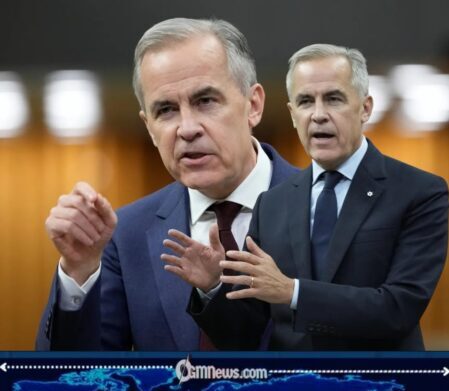
Middle Powers have suddenly found themselves at the center of an increasingly lively geopolitical debate after Canadian Prime Minister Mark Carney argued that countries of similar size and influence should stop competing for favor with the United States and instead build stronger alliances among themselves. Speaking in Dublin ahead of the G7 summit, Carney presented what he described as a “third path” for nations navigating a world increasingly defined by competition between major powers. The comments have generated both praise and criticism, raising questions about the future balance of global influence and whether America’s traditional partners are beginning to rethink old assumptions.
Canada Launches Support Group for Nations Ignored by Superpowers
Carney’s remarks came during meetings with Irish and European leaders as Canada continues efforts to strengthen ties beyond North America. According to the Canadian leader, middle powers face a strategic choice: compete with one another for attention from larger powers or cooperate to increase their collective influence. He emphasized that Canada and the European Union together possess significant economic, technological, and defense capabilities, making closer collaboration both practical and desirable.
The Middle Powers argument reflects a broader theme that Carney has promoted throughout recent international appearances. He has repeatedly suggested that smaller and medium-sized countries can achieve greater leverage by acting collectively rather than negotiating individually with major powers. Supporters view the proposal as a realistic adaptation to changing global conditions, while critics argue that economic realities still tie many nations closely to the United States.
Countries Encouraged to Form Their Own Club Instead of Waiting Outside America’s Door
Additional context reveals that Carney’s comments are part of a larger effort to diversify Canada’s international relationships. Recent speeches and policy initiatives have emphasized expanding trade partnerships, strengthening cooperation with Europe, and reducing vulnerabilities associated with excessive dependence on a single market. At the same time, Canada continues to maintain deep economic ties with the United States, which remains its largest trading partner by a substantial margin.
The broader geopolitical backdrop also helps explain the significance of the Middle Powers discussion. Trade disputes, evolving security concerns, and uncertainty surrounding future international agreements have encouraged many governments to explore alternative partnerships. While some observers interpret Carney’s comments as a challenge to American influence, others see them as a practical response to a more fragmented international system rather than a rejection of cooperation with Washington. Indeed, Carney has simultaneously advocated stronger ties with Europe while also seeking constructive engagement with President Donald J. Trump’s administration on trade and investment issues.
The ultimate test for the Middle Powers concept will be whether it moves beyond speeches and summit declarations. Diplomatic visions are often easier to announce than to implement, especially when national interests collide. Nevertheless, Carney’s remarks have succeeded in elevating an important debate about how countries can maintain influence in an era increasingly shaped by powerful rivals. OGM News will continue monitoring whether this proposed “third path” becomes a meaningful force in global affairs or remains a memorable phrase from an ambitious diplomatic campaign.

[…] […]