



















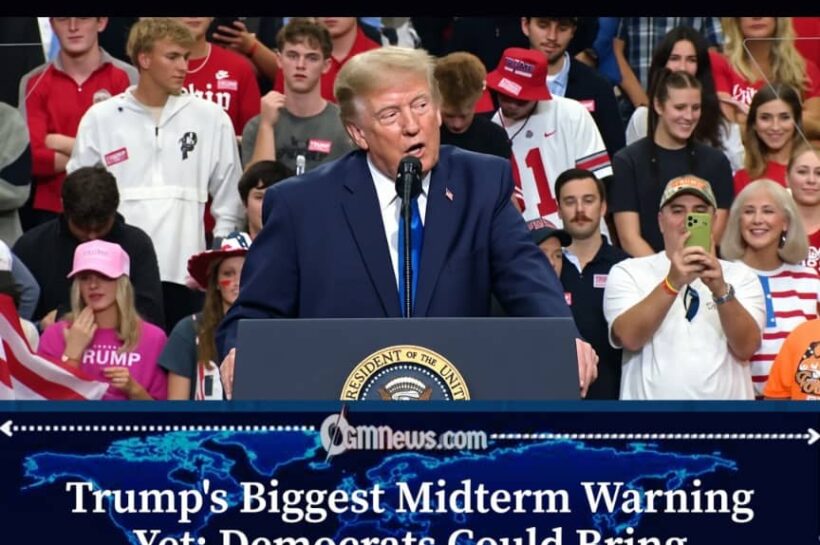




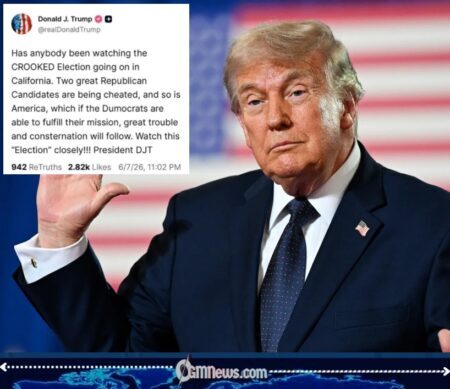
President Donald Trump has once again thrust Election Claims into the center of American politics after repeating allegations that California’s election process is rigged, despite providing no public evidence to support the accusation. The remarks, amplified through social media and a tense television interview, have reignited a long-running national argument over election integrity, media scrutiny, and public confidence in democratic institutions. What began as criticism of California’s ballot-counting timeline has rapidly evolved into another high-profile political confrontation that is drawing attention far beyond the state’s borders.
Trump Defends Election Concerns as Critics Demand Evidence
The latest controversy unfolded after Trump shared a social media post criticizing California’s election administration and suggested that projected results in key races could not be legitimate. He later reinforced those assertions during a nationally televised interview, arguing that the pace of ballot counting was evidence of potential wrongdoing. California officials and election experts, however, have consistently maintained that extended counting periods are common due to the state’s large number of mail-in ballots and extensive verification procedures.
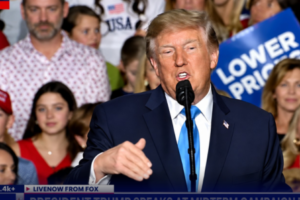
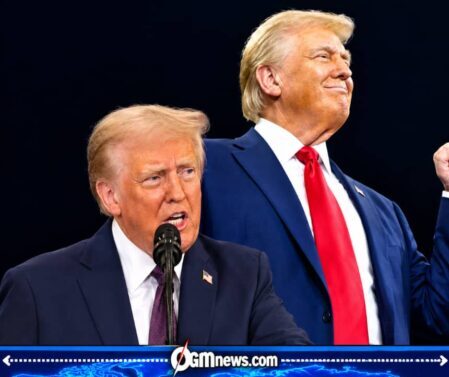
During the interview, the discussion became increasingly confrontational when the president was asked to provide evidence supporting his allegations. The exchange escalated as Trump criticized the interviewer and the network before ultimately ending the conversation and removing his microphone. The dramatic conclusion quickly became a major political story in its own right, with supporters viewing the incident as resistance to hostile questioning and critics portraying it as an inability to substantiate serious allegations.
California Ballot Count Becomes New Political Flashpoint
Beyond the headline-grabbing confrontation, the broader context surrounding California is important for understanding the dispute. Election experts have repeatedly noted that California’s voting system differs from many states because large volumes of mail ballots can arrive close to election day and still require signature verification and processing. As a result, vote counts frequently continue for days after polls close, a reality that election administrators describe as routine rather than suspicious.
The current controversy also reflects a wider political trend in which election administration itself becomes a subject of political combat. Since the 2020 presidential election, allegations of election irregularities have remained a recurring feature of national political discourse. Analysts warn that repeated disputes over election procedures can influence public perceptions regardless of whether evidence is presented, making communication from officials, candidates, and media organizations increasingly significant in maintaining confidence in democratic processes.
As the Election Claims controversy continues to unfold, attention is likely to remain fixed on both California’s final vote totals and the broader debate over election trust in America. For now, the ballots continue to be counted, the arguments continue to be made, and the political theater surrounding California shows little sign of ending anytime soon. OGM News will continue monitoring developments, evidence, official responses, and the wider impact of this dispute on public confidence in future elections.
[…] […]