


























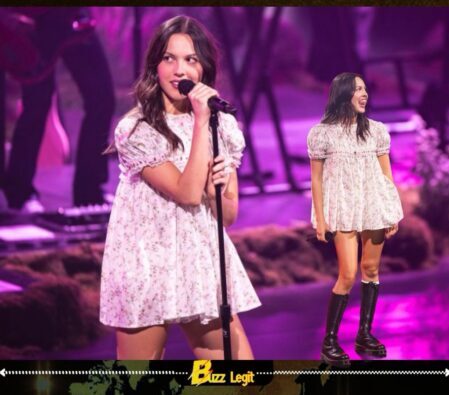
Babydoll Dress controversy erupted across social media after pop star Olivia Rodrigo condemned criticism surrounding one of her recent stage outfits, arguing that the reaction revealed how society has normalized the sexualization of young women and girls. What initially appeared to be another routine celebrity fashion debate quickly escalated into a broader cultural conversation involving feminism, internet outrage, celebrity influence, and the uncomfortable relationship between fashion and public perception. Rodrigo’s blunt remarks immediately divided online audiences, with supporters praising her honesty while critics accused the singer of dismissing legitimate concerns about imagery and aesthetics in modern pop culture.
The singer’s comments followed weeks of backlash tied to her recent “babydoll” inspired fashion choices during performances and promotional appearances linked to her upcoming music era. Online critics claimed the outfits leaned too heavily into youthful aesthetics, with some labeling the style inappropriate or uncomfortable. Rodrigo rejected those accusations entirely, insisting the outrage reflected society’s disturbing tendency to attach sexual meaning to clothing associated with innocence or girlhood.
Babydoll Dress Panic Exposes Society’s Obsession With Young Women’s Bodies
Rodrigo explained during a recent interview preview that she found the criticism deeply upsetting, not because people disliked the outfit, but because of what their interpretation implied. The singer noted that she has previously worn far more revealing stage outfits without attracting the same moral outrage. According to her argument, the fact that a fully covered dress sparked stronger reactions than revealing performance costumes exposed a troubling contradiction in how society perceives women’s bodies.
The Babydoll Dress debate intensified after clips and photos from Rodrigo’s performances circulated online, particularly from appearances connected to her latest album rollout. Critics accused the singer of embracing “infantilized” aesthetics, while defenders argued the controversy ignored the historical roots of the style. Fashion commentators pointed out that similar looks were famously associated with rebellious alternative rock figures from the 1990s, including Courtney Love and Kathleen Hanna, both of whom used hyper-feminine clothing as part of anti-establishment artistic expression rather than sexual provocation.
Olivia Rodrigo Wears Babydoll Dress, Social Media Responds Like It’s a National Emergency
The Pedophilia Debate surrounding Rodrigo’s comments quickly expanded beyond celebrity fashion into larger discussions about cultural hypocrisy and online behavior. Supporters argued that the backlash itself proved Rodrigo’s point: many viewers immediately projected inappropriate interpretations onto a harmless outfit. Others countered that celebrities cannot separate aesthetics from cultural symbolism, especially in highly visual industries where image and branding play central roles in shaping public discourse.
Additional reactions online revealed just how polarized the issue has become. Some social media users defended the singer’s right to wear whatever she chooses without being subjected to moral panic, while others insisted public figures must consider how certain visual themes may be interpreted by audiences. The debate also reopened longstanding conversations about how women in entertainment are frequently criticized regardless of their appearance. Female artists are often accused of being either “too provocative” or “too childish,” creating a no-win scenario where public scrutiny becomes unavoidable.
Fashion experts and cultural writers have also highlighted the long history of the babydoll dress itself, tracing its evolution from postwar lingerie inspiration to a symbol of rebellion in alternative music scenes. Over the years, the style has repeatedly resurfaced in fashion cycles, often attached to debates about femininity, innocence, and autonomy. Rodrigo’s controversy simply placed those old arguments back into the spotlight — this time amplified by modern internet culture, viral outrage, and nonstop social media commentary.
As the online firestorm continues, the Babydoll Dress controversy may ultimately say less about one singer’s outfit and more about society’s ongoing struggle with how women’s self-expression is interpreted, controlled, and criticized. Whether the debate fades quickly or reshapes broader conversations around celebrity culture and fashion politics, Buzz Legit will continue monitoring how the story develops — especially as Rodrigo’s new music era pushes the conversation even further into public view.



[…] […]