














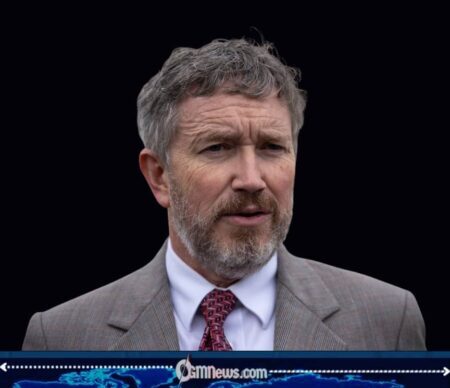
Representative Thomas Massie has warned that his future in Congress could be at risk due to what he describes as overwhelming political spending by influential donor networks and advocacy organizations supporting his opponent. Massie argued that groups aligned with interventionist foreign policy positions are mobilizing significant resources against him because of his opposition to expanded military involvement overseas and continued foreign aid packages.
The remarks have intensified debate inside the Republican Party over the direction of U.S. foreign policy, the influence of lobbying organizations, and the growing divide between traditional conservatives and the “America First” wing of the movement. Massie’s comments have also drawn national attention because they come during a period of heightened tensions in the Middle East and renewed discussion over America’s global role.
Massie’s Claims: Funding, Influence, and Political Pressure
Thomas Massie specifically identified organizations and donors he believes are contributing to efforts aimed at defeating him politically. Among the groups and individuals he named were the Republican Jewish Coalition, AIPAC, Christians United for Israel, Miriam Adelson, Paul Singer, and John Paulson.
He argued that these networks support policies centered on increased military engagement, stronger backing for Israel, and expanded foreign aid commitments. According to Massie, his own opposition to interventionist policies has placed him in direct conflict with influential political and financial interests inside Washington.
The Kentucky congressman framed the issue as part of a broader struggle over the future direction of conservative politics, arguing that anti-interventionist voices are facing growing resistance from established donor structures.
A Growing Divide Inside the Republican Party
The controversy surrounding Massie reflects a widening ideological divide within Republican politics. One faction continues to support a robust international posture, including strong military alliances and continued foreign involvement, while another faction favors a more restrained “America First” approach.
He has emerged as one of the most outspoken critics of military aid packages and overseas intervention, particularly in relation to Middle East policy. His positions have aligned him with a growing number of conservative figures who question the long-term costs of foreign engagements.
At the same time, many Republican leaders and donor groups continue to argue that strong international alliances and military commitments are essential for U.S. security and global influence. This internal disagreement has become increasingly visible during debates over foreign aid and regional conflicts.
The Role of Lobbying Organizations and Political Spending
Organizations such as AIPAC and other advocacy groups have long played a significant role in U.S. political campaigns, particularly on issues related to Israel and foreign policy. These groups often support candidates who favor strong U.S.–Israel relations and robust security cooperation.
Critics, including Massie and some populist conservatives, argue that the scale of political spending by advocacy organizations can heavily influence election outcomes and shape policy priorities in Washington. Supporters of these groups counter that such political participation is a legitimate part of democratic advocacy and reflects the interests of their supporters.
The debate over lobbying influence extends far beyond one congressional race and touches on broader questions about campaign financing, political transparency, and the role of organized advocacy in American democracy.
Massie and President Trump: Shared Themes, Different Approaches
President Donald Trump, currently serving a second term, has often championed “America First” themes similar to those emphasized by Massie, particularly skepticism toward prolonged foreign conflicts and criticism of overseas spending.
However, Massie has also differed from President Donald Trump on several foreign policy decisions, including some military actions involving Iran and broader U.S. strategy in the Middle East. These disagreements have contributed to a complicated political relationship between the congressman and parts of the Trump-aligned political network.
Despite sharing certain populist themes, the two figures represent different approaches to balancing nationalism, foreign alliances, and military engagement. The tensions surrounding Massie’s campaign highlight the continuing evolution of conservative politics in the United States.
Middle East Policy and the Debate Over Foreign Aid
Foreign aid and military assistance have become central issues in the debate surrounding Massie’s political future. Massie has repeatedly questioned large aid packages and argued that the United States should focus more heavily on domestic priorities.
Opponents of Massie’s position contend that foreign aid and strategic partnerships are necessary to maintain global stability and protect American interests abroad. They argue that reducing engagement could weaken alliances and embolden adversaries.
The discussion has become especially intense amid ongoing geopolitical instability in the Middle East, where U.S. involvement continues to shape international diplomacy and security arrangements.
Political Rhetoric and the Future of Conservative Politics
Massie’s use of phrases such as “Epstein class” has generated additional controversy, with supporters viewing the language as criticism of elite political influence while critics argue it risks inflaming partisan tensions. Major news organizations generally describe such phrases as political rhetoric rather than factual classifications.
The broader issue raised by Massie’s comments centers on who shapes Republican policy priorities moving forward. As the party continues to evolve, disagreements over interventionism, donor influence, and America’s role in global affairs are likely to remain defining issues.
Political analysts suggest that these debates could reshape future congressional races and influence the broader ideological direction of the Republican Party for years to come.
A Political Battle Reflecting a Larger Ideological Struggle
Thomas Massie’s warning about the future of his congressional career has brought renewed attention to the intersection of money, lobbying, and foreign policy in American politics. His claims reflect deeper divisions within the Republican Party over military engagement, foreign aid, and the influence of powerful advocacy networks.
As President Donald Trump continues his second term and foreign policy debates intensify, figures like Massie are becoming increasingly central to broader discussions about the future identity of conservative politics. The outcome of these internal struggles may shape not only individual campaigns but also the direction of U.S. policy at home and abroad.
[…] […]