



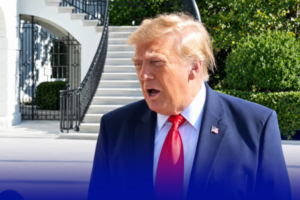
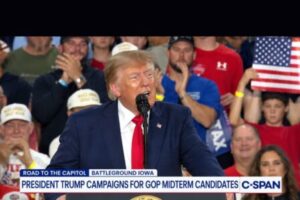





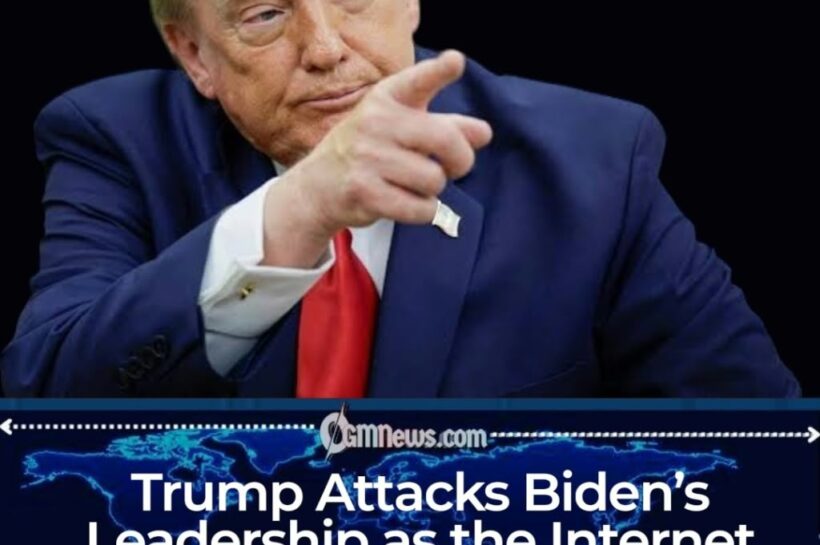









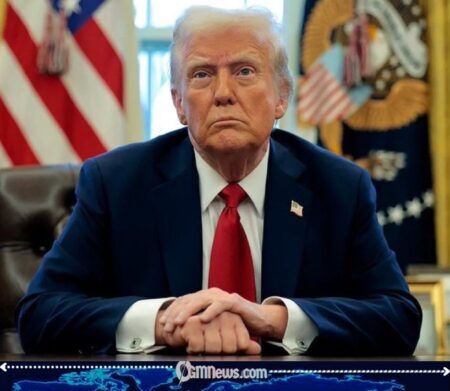
The current U.S. president serving a second term, Donald Trump, has warned that the United Kingdom could face significant tariffs if it does not abandon its digital services tax targeting major American technology firms. Speaking from the Oval Office, Trump indicated that his administration is prepared to retaliate economically, arguing that the levy unfairly singles out U.S.-based companies.
The remarks mark a renewed escalation in trade tensions between Washington and London, coming just weeks after the president suggested that the terms of the 2025 UK–U.S. trade agreement could be revised. The dispute centers on a tax policy that has long been contentious, particularly among countries seeking to regulate the global digital economy.
Growing Tensions Over Digital Tax Policy
The UK’s digital services tax, introduced in 2020, imposes a 2% levy on the revenues of large digital firms operating within the country. It primarily affects companies with global revenues exceeding £500 million and at least £25 million generated from UK users. Many of these firms are American technology giants, making the policy a recurring point of friction between the two allies.
Trump criticized the tax as an attempt to exploit U.S. companies, stating that countries like the UK believe they can “make an easy buck” from America’s leading technology firms. His administration has consistently argued that such measures are discriminatory and undermine fair international trade practices.
The policy has remained in place despite discussions during the negotiation of the 2025 UK–U.S. trade agreement, suggesting that both sides have struggled to find common ground on digital taxation.
Tariff Threats Signal Possible Trade Retaliation By Trump Administration
In his latest comments, Trump made clear that tariffs could be used as a countermeasure if the UK refuses to withdraw the tax. He suggested that any tariffs imposed would be equal to or greater than the revenue generated by the levy, emphasizing a strategy of direct economic reciprocity.
“We’ll probably put a big tariff on the UK,” he said, adding that the move would be straightforward for the United States to implement. The statement underscores a broader willingness by the administration to leverage tariffs as a negotiating tool in international disputes.
Such measures could have significant implications for British exports to the U.S., potentially affecting industries ranging from manufacturing to agriculture. Analysts warn that escalating tariffs could disrupt trade flows and increase costs for businesses on both sides of the Atlantic…
Wider Strains in U.S.–UK Relations
The tariff threat comes amid broader tensions in the U.S.–UK relationship. Diplomatic strains have reportedly intensified following the UK government’s decision not to participate in a recent Middle East conflict, a move that diverged from Washington’s expectations.
British Prime Minister Keir Starmer has maintained a cautious stance on foreign policy alignment, which some observers believe has contributed to the cooling of relations. Trump’s recent comments suggest that trade policy is becoming another arena where disagreements are surfacing.
The evolving dynamic highlights how economic and geopolitical considerations are increasingly intertwined, with trade disputes reflecting deeper strategic differences between the two nations.
Global Context of Digital Tax Disputes
The UK is not alone in implementing digital services taxes. Several European countries, including France, Italy, and Spain, have adopted similar measures aimed at ensuring that multinational tech companies pay taxes in jurisdictions where they generate revenue.
The United States has consistently opposed these policies, arguing that they disproportionately target American firms. Trump has previously pledged to “stand up” to such measures, warning that countries maintaining them could face additional tariffs or trade restrictions.
This broader context suggests that the dispute with the UK is part of a larger global debate over how to tax digital economies in an era of cross-border services and multinational corporations.
Uncertainty Over Trade Agreement Stability
Trump’s remarks also raise questions about the stability of the UK–U.S. trade agreement finalized in 2025. While the deal was intended to strengthen economic ties, the president has indicated that its terms are not fixed and could be revisited if disputes persist.
This uncertainty may create challenges for businesses that rely on predictable trade conditions. Companies operating across both markets could face shifting regulations and potential cost increases if tensions escalate further.
The situation remains fluid, with both governments yet to formally respond to the latest developments. Downing Street has not issued an official comment, leaving the future of the dispute—and the broader trade relationship—uncertain.
Potential Economic and Political Implications
If implemented, tariffs on UK goods could have ripple effects across global markets. Economists caution that such measures often lead to retaliatory actions, potentially triggering a cycle of trade restrictions that could slow economic growth.
Politically, the dispute may test the resilience of one of the world’s closest alliances. While the U.S. and UK share deep historical and strategic ties, disagreements over taxation and trade policy could reshape aspects of their partnership.
As negotiations continue, the outcome will likely depend on whether both sides can reach a compromise that addresses concerns over fairness while preserving the benefits of bilateral trade.

Nhacainew88, sounds Vietnamese? I hope the service translates well! Always up for trying something new,...