










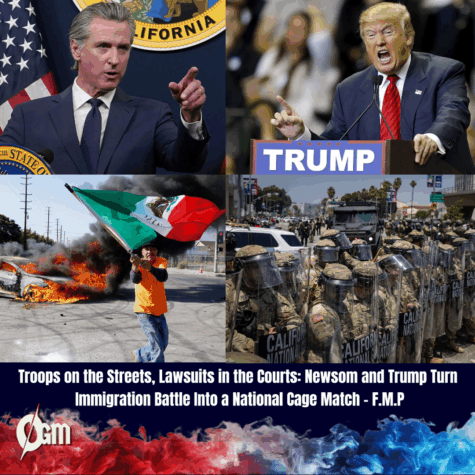
California Versus Washington | OGM News — A fierce legal and constitutional battle is unfolding between California Governor Gavin Newsom and President Donald Trump. After Newsom sued the Trump administration on June 9 for what he calls an unlawful military deployment to Los Angeles, Trump countered on June 30 with a lawsuit against Los Angeles over its sanctuary city policies. These dueling lawsuits highlight deep divisions over federal power, immigration enforcement, and states’ rights, setting the stage for a high-stakes legal showdown that could reshape the limits of executive authority in America.
Federal Troops on California Streets: Newsom’s Bold Challenge
California Versus Washington | OGM News — Governor Gavin Newsom filed a federal lawsuit in San Francisco on June 9, arguing that President Trump overstepped his constitutional authority by deploying the U.S. Marines and federalizing the California National Guard. According to the complaint, Trump bypassed the governor’s consent and failed to meet legal thresholds, such as an insurrection or an uncontrollable rebellion, which are required for such drastic measures. Newsom framed this as an “unprecedented power grab” that threatens to undermine civilian governance and further militarize local law enforcement.
Supporting this stance, legal scholars and retired military leaders warned that such deployments blur the lines between federal and state powers. They pointed to statutory safeguards under the Posse Comitatus Act and the Tenth Amendment, which reserve internal security largely to state governments. Critics argue that bypassing these constraints risks setting a dangerous precedent for the domestic use of military force.
Courts Become the Battleground: California Versus Washington
California Versus Washington | OGM News — Newsom and California Attorney General Rob Bonta sought an immediate court injunction to halt the deployment. Although a district court initially granted a temporary restraining order, the Ninth Circuit swiftly reversed that decision, leaving the Guard under federal control for now. The appeals process is ongoing, and legal experts suggest that the ultimate outcome could define the scope of federal intervention in state affairs for decades.
Meanwhile, observers note that the courts often tread carefully when adjudicating disputes involving military and national security powers. While Newsom’s case is seen as stronger on constitutional grounds, Trump’s defense rests on his asserted duty to protect federal facilities and maintain order, an argument rooted in the rarely invoked Insurrection Act. This legal tug-of-war underscores the judiciary’s crucial role in resolving fundamental questions of American federalism.
Trump Strikes Back: Lawsuit Against Los Angeles Sanctuary Policies
California Versus Washington | OGM News — On June 30, the Trump administration escalated the conflict by suing Los Angeles, Mayor Karen Bass, and the City Council over the city’s sanctuary policies. The Department of Justice, led by Attorney General Pam Bondi, argued that these policies unlawfully obstruct federal immigration enforcement and undermine national security efforts. The lawsuit alleges that Los Angeles prioritizes “illegal aliens over American citizens,” contributing to chaos during recent protests against Immigration and Customs Enforcement (ICE) raids.
Federal officials further claimed that the city’s ordinances thwart crucial consultation and cooperation needed for effective law enforcement. Chad Mizelle from the DOJ emphasized that federal immigration laws will be enforced in Los Angeles “whether or not the city’s government or residents agree.” The lawsuit seeks to invalidate local ordinances that limit collaboration with federal immigration authorities.
Legal Strengths and Weaknesses in California Versus Washington | OGM News —
California Versus Washington | OGM News — Experts widely believe that Newsom’s case against the federal deployment holds stronger legal ground. The U.S. Constitution and statutes like Title 10 and Title 32 place strict conditions on domestic military use, and the Tenth Amendment grants states significant authority over internal security. Without a clear insurrection or rebellion, Trump’s unilateral move faces steep legal hurdles.
In contrast, Trump’s lawsuit against Los Angeles appears weaker. Although the Supremacy Clause establishes that federal law overrides conflicting local measures, the “anti-commandeering” doctrine prevents the federal government from forcing local jurisdictions to enforce federal law. Sanctuary policies typically represent a refusal to cooperate rather than active interference, a distinction upheld in previous Supreme Court rulings such as Printz v. United States and Arizona v. United States. This legal backdrop suggests Los Angeles has a stronger chance of defending its policies.
OGMNews.COM
California Versus Washington: Newsom Accuses Trump of Tyranny, Trump Labels LA a Lawless Sanctuary — The Politics Beneath the Legal Maneuvers
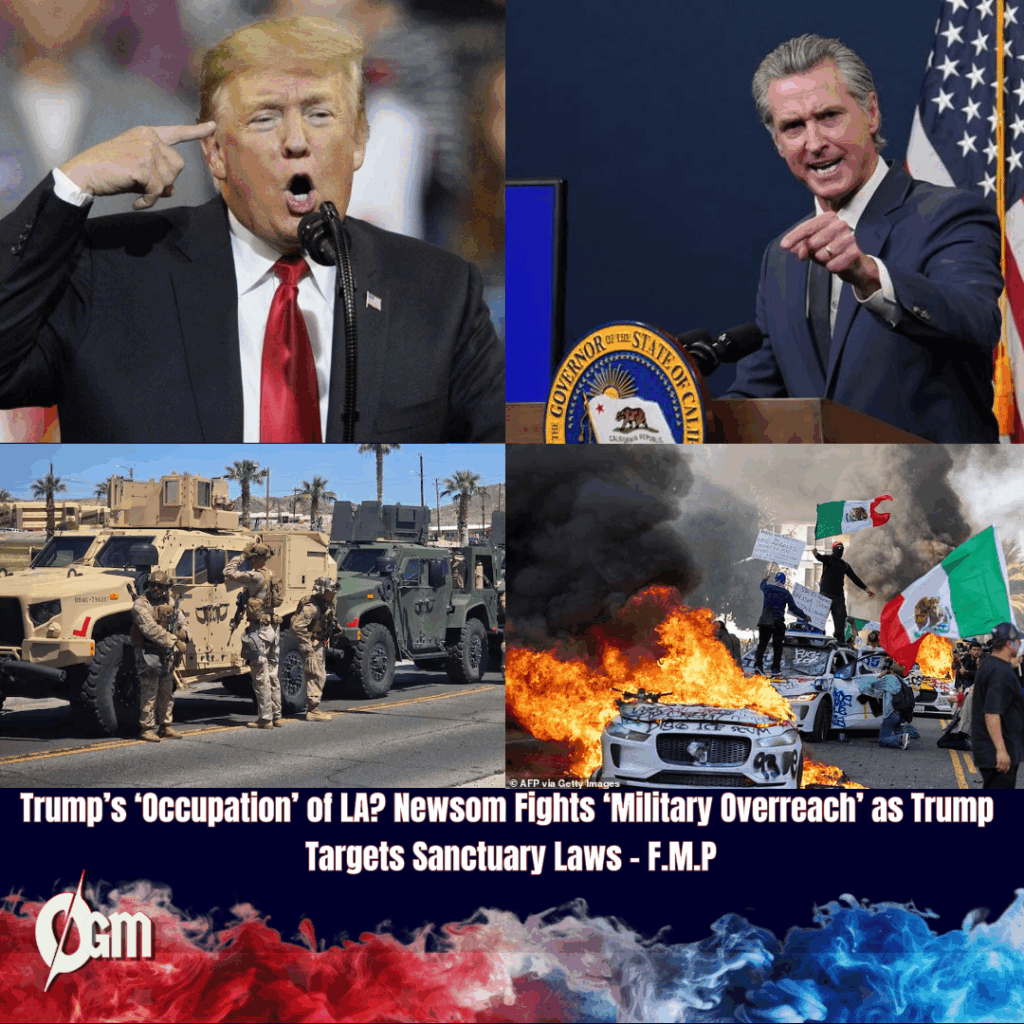
California Versus Washington | OGM News — While both lawsuits are rooted in serious legal questions, political motivations loom large. President Trump’s legal challenge to Los Angeles plays directly to his conservative base, positioning him as tough on immigration and critical of “liberal” city governments. The move reinforces a campaign narrative portraying Democrats as weak on law enforcement and national security.
Conversely, Governor Newsom’s lawsuit serves as a high-profile stance against Trump’s aggressive use of executive power. It bolsters Newsom’s image among progressives and strengthens his national profile, fueling speculation about future presidential ambitions. By positioning himself as a defender of states’ rights and civil liberties, Newsom cements his standing as a leading figure in the Democratic Party’s opposition to Trump.
California Versus Washington: What Comes Next?
California Versus Washington | OGM News — As both cases progress, courts will play a decisive role in clarifying the boundaries between federal authority and state autonomy. The outcomes could influence future debates on immigration enforcement, federal deployments, and the balance of power in the American constitutional system. Meanwhile, the legal battles have already ignited intense public debate and deepened partisan divisions.
Regardless of the rulings, these twin lawsuits underscore an era of heightened political confrontation, where legal strategies double as political theater. With each side framing the other as a threat to democracy and the rule of law, the courtroom drama reflects broader national tensions that show no sign of easing.


