










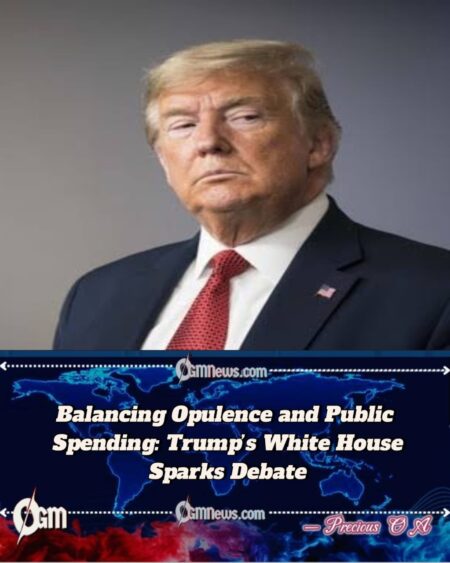
President Trump has drawn attention to the interior of the Oval Office and Cabinet Room, emphasising the use of 24-karat gold in their design. In a public statement, he described the décor as “some of the highest quality” ever used in the White House, adding that foreign leaders “freak out” at the craftsmanship and beauty on display. The comments reflect a continuation of his practice of blending symbolism, presentation, and policy to project a particular image of the presidency.
President Trump links success with visible displays of wealth and quality. According to White House aides, the redesign of the Oval Office and Cabinet Room was part of an effort to project strength, prestige, and American craftsmanship to visiting dignitaries. The décor includes gold-leaf detailing, custom furnishings, and curated artworks intended to reflect both history and power. Officials argue that a dignified and memorable setting can have an intangible effect on negotiations, boosting America’s standing abroad without a single policy change.
Foreign leaders reportedly express surprise at the scale of the changes. The president has said such reactions are proof that the United States “leads by example” and that the White House’s appearance should “match its status as the most powerful office in the world.” Supporters argue that a refined presidential environment can influence diplomacy and create a more commanding stage for high-level negotiations. In this view, the luxurious interior is not an indulgence but an investment in soft power.
Healthcare Cuts Spark National Discussion
President Trump promoted the gold décor while his administration moved forward with significant reductions to federal healthcare programmes. The changes, which the White House described as eliminating “wasteful spending,” are projected to affect approximately 15 million Americans. Officials say the cuts will streamline services, reduce fraud, and redirect funds toward “more effective” health initiatives. In press briefings, they have pointed to rising deficits and argued that tough choices are necessary to keep the system solvent.
Opponents, however, see the policy as a withdrawal of essential support for vulnerable citizens. Public-health groups warn that millions could lose access to affordable care, increasing strain on emergency services and state budgets. Analysts also note that the cuts coincide with ongoing inflationary pressures, making healthcare costs harder to manage for low- and middle-income families. State officials in several regions have already announced contingency plans to handle an expected rise in uncompensated care.
This contrast between symbolic grandeur and policy austerity has become a focal point for critics who believe the administration’s priorities are misaligned. Yet supporters maintain that the cuts are fiscally responsible and that the president’s public image — including the luxurious White House interior — is part of a broader strategy to strengthen the country’s global stature. They argue that domestic belt-tightening and international prestige are complementary, not contradictory.
Balancing Image and Policy
President Trump’s approach to the White House décor is viewed by political scientists as more than aesthetic. High-status settings may create psychological advantages during negotiations and signal stability to allies and rivals alike. In this sense, the gold-laden offices could be interpreted as tools of soft power rather than mere indulgence. Studies of leadership environments show that surroundings can subtly affect perceptions of authority, seriousness, and credibility.
President Trump’s dual narrative of “gold versus healthcare” highlights a deeper conversation about governance in the United States. Should presidential image be prioritised alongside domestic welfare? Or can both coexist as facets of a larger national strategy? These questions are likely to shape the political dialogue as the administration continues into its second term. Lawmakers from both parties are already debating whether the symbolism of the White House should influence budget allocations.
Supporters and critics alike agree that his choices reflect a deliberate vision. The look of the Oval Office stands as a symbol of his administration’s achievements, while the healthcare debate underscores the trade-offs inherent in policy-making. Whether voters see that symbolism as inspiring or misplaced remains an open question. For now, the president has doubled down on both the décor and the cuts, saying each represents “a step toward a stronger America” — one projecting confidence abroad while tightening its belt at home.


